


-

Blob Opera
-

The Choicest Voice
-

SpongeBob Is This How You Get Your Sick Kicks
-

Hiding from Randall Monsters Inc
-

Dance Moms – GET YOUR FINGER OUT OF MY FACE
-

Doppio switch into Diavolo
-

SpongeBob SquarePants – Insultin a mans ship
-

Ichigo vs Grimmjow
-

Family Guy Peter Does Crack
-

TAWOG Have You Noticed That Your Voice Has Changed – The Castle
-

Kung Fu Panda o sigma da Bahia
-

Peter Griffin Plays Call of Duty Dub
-
Stutter incident – Joe Bart
-
No This Is My Lolly

Rhythm Sprout














![SEU MANIACO [PT-BR]](https://thechoicervoicergames.com/wp-content/uploads/2026/09/Seu-Maniaco_12_11zon-200x150.webp)








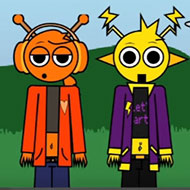



In Rhythm Sprout you start out as an ordinary onion handed a quest by King Brock, sent to stop the Sugary Sweets army and its ruler, King Sugar Daddy, while also tracking down the king’s missing daughter, Princess Cauliflower, and none of that context matters once the first notechart starts scrolling.
| Genre | Rhythm action |
| Core Mechanic | Hit notes on the beat while enemies strike back on missed notes |
| Platform | Console and PC |
Notechart Combat as Sprout’s Real Challenge
Rhythm Sprout builds its battles around hitting notes precisely on the beat, with enemies capable of striking back whenever Sprout misses one, turning each stage into a hybrid of rhythm precision and light combat pressure. That extra layer separates it from rhythm games where a missed note only costs a score multiplier, since here a sloppy run can genuinely put a level’s completion at risk.
New players tend to chase perfect accuracy on every single note, panicking after one miss and losing the beat entirely for several notes afterward. More experienced players treat a miss as a small, recoverable cost, snapping back into rhythm on the very next note instead of chasing a flawless streak.
By the time a run reaches its King Sugar Daddy encounter, the difference between those two mindsets becomes obvious, since the boss’s notechart punishes hesitation far more than it punishes the occasional miss.
Genre-Hopping Soundtracks Across Rhythm Sprout’s Levels
Few rhythm games commit to as much genre-hopping as Rhythm Sprout, whose soundtrack swings through EDM, K-pop, drum and bass, disco, lo-fi hip-hop, and even metal across its thirty handcrafted levels. That range keeps notechart patterns from settling into one predictable rhythm, forcing players to adapt their timing instincts as the music style shifts from stage to stage.
- Early levels: gentler tempos that establish Sprout’s basic hit-timing window
- Mid-campaign levels: genre shifts that force new timing habits for each style
- King Sugar Daddy’s stage: dense notecharts that punish hesitation more than occasional misses
One thing only becomes obvious after several attempts: Princess Cauliflower’s rescue sequence changes its notechart rhythm slightly depending on how clean the preceding stage was, a detail easy to miss on a first playthrough.
EX-Modes and What Keeps Players Coming Back to Rhythm Sprout
Once the story campaign is cleared, Rhythm Sprout keeps offering reasons to return through EX-modes: Turbo Mode speeds everything up, Mirror Mode flips the note layout, and a Totally Random Mode throws predictability out entirely. Hardcore remixes and highscore challenges push accuracy-focused players further, while a handful of gimmicky bonus levels reward players who stick around after the credits.
A genuinely divisive point among players is how much harder Rhythm Sprout leans than its cute onion-versus-candy premise suggests, catching some newcomers off guard when King Brock’s early tutorial stages give way to genuinely demanding King Sugar Daddy patterns just a few levels later.
Between Sprout’s absurd vegetable-versus-candy quest, a soundtrack that refuses to settle into one genre, and a stack of remix modes built for replay, Rhythm Sprout earns its reception by taking rhythm gaming seriously while wrapping it in enough personality to avoid feeling like just another notechart simulator.
Comments
There are no reviews yet. Be the first one to write one.