


-
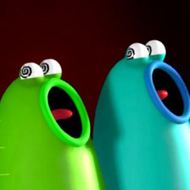
Blob Opera
-
The Choicest Voice
-
SpongeBob Is This How You Get Your Sick Kicks
-
Hiding from Randall Monsters Inc
-
Dance Moms – GET YOUR FINGER OUT OF MY FACE
-

Doppio switch into Diavolo
-
SpongeBob SquarePants – Insultin a mans ship
-
Ichigo vs Grimmjow
-
Family Guy Peter Does Crack
-
TAWOG Have You Noticed That Your Voice Has Changed – The Castle
-
Kung Fu Panda o sigma da Bahia
-
Peter Griffin Plays Call of Duty Dub
-
Stutter incident – Joe Bart
-
No This Is My Lolly

Short Life 2


![SEU MANIACO [PT-BR]](https://thechoicervoicergames.com/wp-content/uploads/2026/09/Seu-Maniaco_12_11zon-200x150.webp)




Short Life 2 looks like a simple obstacle course with a floppy little guy running through it. It plays like a puzzle box built entirely out of ways to kill that floppy little guy in increasingly creative fashion, and the gap between those two impressions is exactly where the game earns its reputation.
Ragdoll Physics as the Real Obstacle in Short Life 2
The ragdoll itself is the hardest part of Short Life 2 to work with, since it has no rigid skeleton and no forgiveness for careless input. Walking, jumping, and climbing all require the same careful, slightly clumsy timing, because pushing forward too aggressively near a ledge lets momentum alone carry the ragdoll straight into a spinning saw blade.
Newcomers usually try to control the ragdoll like a normal platforming character, holding a direction and expecting it to stop cleanly at a ledge. That instinct is the single biggest early mistake, since the ragdoll keeps sliding on its own momentum well past where a rigid character would have planted its feet.
By the time a run reaches its later stages, that same momentum becomes something players actively use rather than fight, nudging the ragdoll just enough to clear a gap instead of stopping short of it.
Traps and Interactive Objects Across Short Life 2
Across more than twenty stages, Short Life 2 escalates from simple gaps and single blades into layered gauntlets involving pressure buttons, movable wooden crates, swinging hazards, and timed explosive charges. Some of these need to be pushed or triggered deliberately to open a path forward, turning certain sections into light puzzles rather than pure reflex tests.
Speedrunning-minded players tend to memorize exact crate placements and button timings well before they master the reflex side of a stage, since knowing the puzzle solution in advance removes half the failure points. Players just looking to enjoy the chaos, by contrast, often trigger every trap on purpose just to watch what happens.
What decides whether an attempt survives a saw-heavy section usually comes down to one specific detail: whether the ragdoll’s arm or leg clips a hazard’s edge a frame before the body would have cleared it, a distinction only visible once you’ve watched enough failed runs to recognize the pattern.
Star collection: scattered stars across each level function as the game’s currency, and gathering enough unlocks new playable ragdoll skins with no change to the underlying physics, giving completionists a cosmetic goal once the main stages are cleared. Trap density scaling: new hazard types appear roughly every few stages rather than all at once, which is why the difficulty curve rarely flattens for long even after twenty-plus levels. Comedy over frustration: nearly every instant death plays out as loose, floppy physics comedy rather than a punishing reset, which is precisely why failing the same section repeatedly stays entertaining instead of grating, and it’s also the most divisive element among players who want tighter, more serious platforming instead.
Short Life 2 never asks players to stop laughing at their own failures, and that constant physics-driven comedy, layered on top of genuinely clever trap sequencing, is why watching the ragdoll crumple through a saw-lined corridor for the fifth time still gets a reaction the sixth time too.
Comments
There are no reviews yet. Be the first one to write one.