







Meccha Chameleon
Four different girls need four completely different looks before the show starts, and that single fact is what keeps Tiktok Musical Fest from feeling like a one-character dress-up game stretched thin. Skyler, Sunny, Ruby, and Violet all need styling before their festival performance, and none of them share a wardrobe.
| Genre | Dress-up and styling |
| Core Mechanic | Style four characters and choose their instruments before a festival performance |
| Platform | Browser and mobile |
Styling Skyler, Sunny, Ruby, and Violet in Tiktok Musical Fest
The heart of Tiktok Musical Fest is its wardrobe system, letting players mix and match costumes and outfit pieces across all four characters until each one’s look feels performance-ready. Colors, accessories, and outfit styles swap freely, turning the preparation phase into an open-ended styling puzzle rather than a fixed checklist.
Players new to the format often style the first character extensively, then rush through Ruby and Violet at the end once the novelty settles in. More completionist-minded players treat all four looks as equally important, circling back to rebalance an earlier outfit once a later combination gives them a better color-matching idea.
By the time all four girls are dressed, the shared wardrobe pool means no single piece feels wasted, since a hat that didn’t suit Sunny’s look might turn out to be exactly right on Violet.
Choosing Instruments Alongside Outfits
Alongside costume selection, Tiktok Musical Fest asks players to choose a musical instrument for each Rainbow Girl heading into the performance. That instrument choice sits next to the outfit decisions as part of the overall preparation, reinforcing that the girls are getting ready for an actual musical showcase rather than posing for a single photo.
Instrument pairing: matching an instrument to a character’s finished look adds a layer of creative decision-making on top of wardrobe styling, and it answers a question new players often have early on, whether instrument choice is purely cosmetic or tied to the outfit at all; in practice, both choices are made independently but are clearly meant to complement each other visually.
Frequently Asked Questions About Tiktok Musical Fest
- How many characters can be styled in one playthrough? All four, Skyler, Sunny, Ruby, and Violet, each get their own costume and instrument choices in a single session.
- Does styling one character affect what’s available for the others? No, the wardrobe pool is shared, but choosing a piece for one character doesn’t lock it away from being used on another later.
- Is instrument choice tied to the outfit selected? Not mechanically, though most players pick an instrument that visually complements the finished costume.
What makes Tiktok Musical Fest stick with its audience is the combination of a relatable festival-prep premise with genuinely flexible styling options across a full cast, and juggling four distinct looks for Skyler, Sunny, Ruby, and Violet at once gives the format more room to experiment than a single-character dress-up game usually allows.
What happens when the song you actually want to tap along to isn’t in the built-in list at all? Piano Star: Tap Music Tiles answers that question differently than most tap-tile competitors, letting players import their own audio and turn it into a fully playable set of falling tiles.
| Genre | Rhythm tile-tapping |
| Core Mechanic | Tap and hold falling black tiles in time with a track’s actual notes |
| Platform | Mobile |
Reading Tile Patterns in Piano Star: Tap Music Tiles
At its foundation, Piano Star: Tap Music Tiles asks for exactly what the genre always has: tapping and holding falling tiles the instant they cross a target line, synced to the underlying track. No musical background is required, since the timing windows are built to be readable at a glance rather than demanding real piano knowledge.
Newcomers commonly tap slightly ahead of the tile instead of exactly on it, a habit carried over from simpler rhythm formats that punishes precision far less. By the time a player reaches the faster K-pop and EDM tracks, that early-tap habit turns into missed combos the tile pattern was never actually asking for.
What separates Piano Star: Tap Music Tiles from its closest competitors is how tightly the visual tile patterns track the actual notes of each song, which makes even unfamiliar tracks feel intuitive within the first few seconds of a run rather than requiring memorization first.
Custom Imports and Genre Range in Piano Star: Tap Music Tiles
The built-in library spans pop, classical piano arrangements, K-pop, J-pop, EDM, hip-hop, and R&B, with new tracks added on a regular schedule. The standout feature, though, is custom audio import, which analyzes a personal music file and generates a matching set of tiles automatically.
Custom import: turns Piano Star: Tap Music Tiles from a curated playlist into an open-ended instrument for whatever song a player actually cares about, generating tile density based on the track’s own tempo and note density rather than a generic pattern. That single feature answers one of the most common questions players ask before trying the game: whether a specific favorite song can actually be played, and the answer is generally yes as long as the audio file itself is available to import.
Endless, PVP, and Offline Play in Piano Star: Tap Music Tiles
An Endless mode strips away the fixed track length entirely for players who want uninterrupted tapping without a defined finish line, appealing especially to players chasing a personal best streak rather than a specific song’s score. A PVP mode adds direct competition against another player’s timing and accuracy on shared tracks, giving the tapping mechanic a comparative edge solo play lacks.
Competitive players tend to gravitate toward PVP specifically because Endless mode has no opponent to measure against, while casual players usually stick to the standard song list and treat Endless as an occasional side activity. An offline mode rounds out the package, which answers a second common question directly: yes, the core tapping loop still works without a steady connection.
None of this reinvents the tap-tile formula at its core, and Piano Star: Tap Music Tiles was never trying to. By removing the genre’s biggest limitation, a fixed and often repetitive song list, and giving PVP mode a real reason to exist alongside Endless, it holds its own in a genre that rarely rewards this much flexibility.
What is Huggy Wuggy doing in an arrow-tapping duel against Boyfriend, and why does that pairing feel completely normal once you’ve played a few rounds? Music Night Battle answers that by treating its crossover roster as the entire point, not a gimmick layered on top of a rhythm battler.
| Genre | Rhythm battle |
| Core Mechanic | Hit falling arrows in four lanes to outscore an opposing character |
| Platform | Mobile and PC |
Four-Lane Arrow Battles in Music Night Battle
The core loop is built around four scoring lanes, where arrows fall toward a target zone and pressing the matching key at the right instant scores points against whichever character is on the opposing side. Accuracy on each hit determines rank progress, and difficulty settings scale arrow density and speed considerably.
New players often watch the falling arrows instead of the target zone itself, reacting a beat late as a result. Players who improve quickly learn to fix their eyes on the target line and treat the falling arrow as peripheral timing information instead of the main thing to track.
By the time a match reaches Rainbow Friends-tier difficulty, that shift in focus becomes the entire difference between a clean combo and a broken one.
A Crossover Roster Built Around Recognition
What separates Music Night Battle from a plain rhythm clone is its willingness to throw characters from wildly different corners of internet culture into the same battle roster, including Boyfriend and Girlfriend, Huggy Wuggy, the Rainbow Friends cast, Duet Cats, Jambo Josh, an Imposter-style character, and a SpongeBob-inspired opponent.
Character recognition: that mashup approach means the character select screen functions almost like an internet-culture time capsule, appealing to players drawn in by recognizing a specific face as much as by the rhythm mechanics themselves, and it answers a common first-time question directly: yes, the roster really does mix characters from completely unrelated sources into one battle format.
Frequently Asked Questions About Music Night Battle
- Can I compete directly against other real players? Yes, a head-to-head mode lets players battle each other’s timing and accuracy rather than only facing computer-controlled opponents.
- What characters appear in Music Night Battle? The roster includes crossover-style characters such as Boyfriend, Girlfriend, Huggy Wuggy, Rainbow Friends, and Duet Cats, among others.
- Does difficulty scale differently for each character matchup? Yes, later matchups like Rainbow Friends-tier battles noticeably increase arrow density and speed compared to early Boyfriend rounds.
Music Night Battle isn’t trying to reinvent arrow-based rhythm battling so much as betting on recognizable characters and head-to-head competition to stand out, and for players who enjoy spotting Huggy Wuggy across the battle screen as much as they enjoy the rhythm challenge itself, that combination gives it a distinct hook the mechanics alone wouldn’t provide.
You drag the mouse up and down chasing a melody line, click at what feels like the right instant, and out comes a sound closer to a dying goose than the anthem you were aiming for. That exact moment, failing loudly and then trying again anyway, is what made Trombone Champ into one of the most talked-about rhythm games in recent memory.
| Genre | Rhythm music |
| Core Mechanic | Control pitch continuously with the mouse while timing notes to the beat |
| Platform | PC and console |
Why Free-Form Pitch Control Defines Trombone Champ
Most rhythm games lock players into hitting predetermined notes at predetermined times. Trombone Champ throws that convention out: moving the mouse changes pitch continuously, and a button triggers the sound, meaning a player can technically play any note at any moment rather than following a fixed lane.
New players usually try to nail the exact pitch immediately, overcorrecting wildly between notes and producing exactly the honking noise the game has become known for online discussion threads. Players who improve tend to stop chasing precision and instead learn each song’s melodic shape, sliding smoothly between notes the way an actual trombone player would.
By the time a player reaches one of the faster classical pieces, that shift from precision-chasing to shape-reading becomes the entire difference between an S rank and a chaotic F.
Toots and Tromboner Cards: Trombone Champ’s Reward Loop
Every completed song hands out an in-game currency called Toots, which can be spent on collectible Tromboner Cards packed with joke trivia about musicians, trombones, and the game’s own fictional lore. Finishing a song also earns a letter rank from F up to S, giving completionist players a reason to revisit tracks they only barely survived the first time.
- Toots: earned from completing any song, regardless of final rank
- Tromboner Cards: collectible rewards purchased with Toots, containing joke lore and trivia
- Letter ranks: F through S, based on pitch and timing accuracy across a full song
That collectible layer is where the game’s comedic voice shows through most clearly, treating its own premise with just enough mock-seriousness to keep the absurdity of a competitive trombone simulator feeling intentional rather than accidental, even if a few players wish the card trivia connected more directly to actual song content.
Do I need real trombone technique to play Trombone Champ well?
No, the mouse-based pitch control is built for anyone, though mastering precise timing and pitch shape still takes real practice.
What do Toots actually unlock in Trombone Champ?
Toots purchase Tromboner Cards, collectible items containing joke trivia about musicians, trombones, and the game’s fictional lore rather than gameplay upgrades.
How is my rank calculated at the end of a song?
Rank runs from F to S based on how accurately pitch and timing matched the melody throughout the full track, not just at its hardest moment.
It would have been easy for Trombone Champ to coast entirely on its first-impression honking noises, but the real freedom built into its pitch system, and the sheer number of Tromboner Cards left to collect, is why players who stuck around for the S ranks found something with genuine staying power underneath the joke.
In Rhythm Sprout you start out as an ordinary onion handed a quest by King Brock, sent to stop the Sugary Sweets army and its ruler, King Sugar Daddy, while also tracking down the king’s missing daughter, Princess Cauliflower, and none of that context matters once the first notechart starts scrolling.
| Genre | Rhythm action |
| Core Mechanic | Hit notes on the beat while enemies strike back on missed notes |
| Platform | Console and PC |
Notechart Combat as Sprout’s Real Challenge
Rhythm Sprout builds its battles around hitting notes precisely on the beat, with enemies capable of striking back whenever Sprout misses one, turning each stage into a hybrid of rhythm precision and light combat pressure. That extra layer separates it from rhythm games where a missed note only costs a score multiplier, since here a sloppy run can genuinely put a level’s completion at risk.
New players tend to chase perfect accuracy on every single note, panicking after one miss and losing the beat entirely for several notes afterward. More experienced players treat a miss as a small, recoverable cost, snapping back into rhythm on the very next note instead of chasing a flawless streak.
By the time a run reaches its King Sugar Daddy encounter, the difference between those two mindsets becomes obvious, since the boss’s notechart punishes hesitation far more than it punishes the occasional miss.
Genre-Hopping Soundtracks Across Rhythm Sprout’s Levels
Few rhythm games commit to as much genre-hopping as Rhythm Sprout, whose soundtrack swings through EDM, K-pop, drum and bass, disco, lo-fi hip-hop, and even metal across its thirty handcrafted levels. That range keeps notechart patterns from settling into one predictable rhythm, forcing players to adapt their timing instincts as the music style shifts from stage to stage.
- Early levels: gentler tempos that establish Sprout’s basic hit-timing window
- Mid-campaign levels: genre shifts that force new timing habits for each style
- King Sugar Daddy’s stage: dense notecharts that punish hesitation more than occasional misses
One thing only becomes obvious after several attempts: Princess Cauliflower’s rescue sequence changes its notechart rhythm slightly depending on how clean the preceding stage was, a detail easy to miss on a first playthrough.
EX-Modes and What Keeps Players Coming Back to Rhythm Sprout
Once the story campaign is cleared, Rhythm Sprout keeps offering reasons to return through EX-modes: Turbo Mode speeds everything up, Mirror Mode flips the note layout, and a Totally Random Mode throws predictability out entirely. Hardcore remixes and highscore challenges push accuracy-focused players further, while a handful of gimmicky bonus levels reward players who stick around after the credits.
A genuinely divisive point among players is how much harder Rhythm Sprout leans than its cute onion-versus-candy premise suggests, catching some newcomers off guard when King Brock’s early tutorial stages give way to genuinely demanding King Sugar Daddy patterns just a few levels later.
Between Sprout’s absurd vegetable-versus-candy quest, a soundtrack that refuses to settle into one genre, and a stack of remix modes built for replay, Rhythm Sprout earns its reception by taking rhythm gaming seriously while wrapping it in enough personality to avoid feeling like just another notechart simulator.
In Geometry Dash Wave you start every level already mid-transformation, locked into the diagonal zigzag of the Wave form with no cube, ship, or ball icon to fall back on, which matters because Wave behaves nothing like any of them.
Why the Wave Form Plays Differently From Cube or Ship
Cube and Ship movement in the wider Geometry Dash series carries a small cushion of momentum and delay that softens a slightly late input. The Wave form used throughout Geometry Dash Wave has none of that: holding the input sends the wave climbing at a fixed angle, releasing sends it dropping at the same angle, and both reactions land instantly.
That instant responsiveness is exactly what long-time fans point to when explaining why Wave sections built a reputation across the broader Geometry Dash community even before this dedicated take existed. A cube player’s instinct to tap-and-recover simply does not translate, since there is no recovery window here at all.
New players consistently misjudge how little room the wave has to correct itself mid-climb, treating a near-miss the way they would in Ship mode, where drifting slightly off course rarely ends a run outright.
Corridor Design and Reading Ahead in Geometry Dash Wave
Levels are built around tight diagonal corridors that leave almost no margin for error, forcing players to read upcoming geometry several beats ahead of where the wave currently sits. Because the movement pattern has no natural pause, planning has to happen continuously rather than obstacle by obstacle.
Speedrun-focused players tend to memorize entire corridor sequences as a single held rhythm rather than a string of individual taps, while players attempting a level for the first time usually die repeatedly on one specific diagonal squeeze before the timing settles into muscle memory.
Levels typically introduce their hardest corridor about two-thirds of the way through, which is often the exact point where a otherwise-successful attempt ends, a detail only obvious after enough failed runs to notice the pattern.
- No momentum delay: direction changes register the instant an input is pressed or released
- Continuous zigzag path: there is no neutral, stationary state to reset from mid-level
- Corridor-based hazard placement: tight diagonal gaps replace the platforms and spikes seen in Cube-based stages
Frequently Asked Questions About Geometry Dash Wave
- Do I need experience with the main Geometry Dash game first? It helps with general timing instincts, but Wave’s instant-response movement is different enough that even Cube or Ship veterans face a real adjustment period.
- What makes Wave harder than Ship mode? Ship allows gradual drift correction mid-flight; Wave’s instant direction change means a mistimed tap commits immediately, with no gentle recovery available.
- Are Geometry Dash Wave levels hand-built or randomly generated? They follow the hand-built corridor design typical of the wider Geometry Dash scene, shaped specifically around Wave’s zigzag movement.
Geometry Dash Wave isn’t trying to ease anyone in gently, and once a corridor finally clicks after the twentieth attempt, that specific relief, the one Cube or Ship never quite produces the same way, is the whole reason players who master Wave keep chasing harder corridors instead of going back to it.
Dancing Cats – Music Tiles looks like a cutesy novelty built around a meow sound effect, but it plays like a fairly precise piano-tile game once the difficulty settings past the first few songs stop being forgiving about mistimed taps.
| Genre | Rhythm tile-tapping |
| Core Mechanic | Tap falling tiles in rhythm to make a cat leap forward |
| Platform | Mobile |
One-Touch Tapping at the Core of Dancing Cats – Music Tiles
The core mechanic is a one-touch system: tap the screen in rhythm and the chosen cat leaps forward from tile to tile across a scrolling track. There’s no complex input scheme to learn, since every action boils down to a single well-timed tap.
New players tend to tap on visual instinct, watching the cat’s position rather than the beat itself, which works fine on slower songs but falls apart once the tempo picks up. Players who improve quickly stop watching the cat entirely and tap purely to the underlying rhythm instead, trusting the animation to follow.
By the time a song reaches its faster remix sections, that shift from visual tracking to pure rhythm tapping becomes the entire difference between a clean run and a broken combo.
Song Selection and Remix Variety in Dancing Cats – Music Tiles
The soundtrack leans heavily into pop and K-pop tracks, remixed with playful touches and a signature meow sound effect layered directly into the beat itself. The song list keeps expanding as players progress, with new tracks unlocking alongside new tiles to tap through.
- Standard pop tracks with straightforward, evenly spaced tile patterns
- K-pop remixes with denser tile clusters during chorus sections
- Meow-accented remixes where the sound cue itself doubles as a timing hint
That meow cue is a small detail some players find genuinely useful for timing, while others consider it a gimmick that wears thin after a dozen songs, a fairly common point of disagreement in player discussions.
Collecting Cats Through Progress in Dancing Cats – Music Tiles
Progress unlocks additional kawaii cat characters to play as, each with its own distinct look layered on top of the same tap-based movement. None of these unlocks change how the rhythm mechanic functions, keeping the challenge consistent while still giving completionist players a reason to keep clearing songs.
Do I need rhythm game experience to play Dancing Cats – Music Tiles well?
No, the one-touch tap control keeps the barrier to entry low, though accurate beat-based timing still determines the final score.
Does the meow sound effect actually help with timing?
Some players use it as an audio cue for tile timing, while others tune it out entirely and rely purely on visual tile position.
Can I unlock more cats to play as?
Yes, progressing through songs unlocks additional cat characters with their own distinct appearances, though the underlying tapping mechanic stays identical across all of them.
The piano-tile format has been done countless times, but Dancing Cats – Music Tiles understands that presentation can carry a familiar mechanic a long way, and that meow-accented remix layer is exactly the detail that separates it from a dozen near-identical tile games sharing the same shelf.
Billie’s mystical axolotl mentor, Aristotle, and her loyal pet fox, Oscar, remain the two constants tying Billie Bust Up 2 back to the musical-adventure world its title continues, even as the daring young goat at the center of it all faces a fresh set of stages built around movement synced tightly to music.
Billie’s Musical-Platforming Identity in Billie Bust Up 2
What defines Billie Bust Up 2 is treating movement and music as a single system rather than separate layers stacked on top of each other. Jumps, dashes, and traversal challenges are built to line up with musical cues, so a level rarely feels like platforming with a soundtrack playing in the background.
New players often try to move through a stage at their own pace, ignoring the beat entirely until a mistimed jump makes the musical cue impossible to ignore any longer. Players who adjust quickly start treating the beat itself as the actual instruction, letting Billie’s rhythm dictate when to dash rather than reacting purely to the geometry in front of her.
By the time a stage nears its climax, that beat-first mindset becomes the deciding factor in whether Billie clears a sequence cleanly or stumbles through it off-rhythm.
Stage Variety and Confrontations in Billie Bust Up 2
Musical platformers in this style typically lean on memorable, larger-than-life encounters to punctuate their stages, and Billie Bust Up 2 follows that same structure, building toward set-piece moments where Billie, often flanked in spirit by Oscar’s scouting instincts or Aristotle’s guidance, faces the platforming and musical challenge at its peak.
Pacing structure: between those bigger encounters, standard traversal stages give players room to build up movement rhythm gradually, easing into the tighter timing windows the confrontations demand, a pacing rhythm that answers a common question directly, whether the game stays hard throughout or builds toward it; it clearly builds, with calmer stretches deliberately placed before each spike in difficulty.
Casual players tend to treat these calmer stretches as a breather, coasting through on rhythm alone without pushing for extra collectibles tucked along the route. More completionist-minded players use that same calmer pacing to backtrack for anything missed, since the confrontations that follow rarely leave room for exploration once they start.
One detail that only becomes clear after a few stages: Oscar’s presence in the background art often shifts subtly ahead of an upcoming confrontation, a small visual tell that attentive players start reading as an early warning before the music itself ramps up.
Who Billie Bust Up 2 Is Really Built For
Fans of colorful, character-driven platformers with a strong musical hook are the clearest audience here, especially players who already know Aristotle’s calm mentorship and Oscar’s loyal energy from earlier in Billie’s story and want more of that same dynamic. The game leans on approachable controls early, making it friendly to newcomers while still offering enough precision-timing challenge in its later stages to satisfy players looking for a real test of rhythm and reflexes together.
A fair point some players raise is that the early stages lean a little too gently on hand-holding before the real rhythm-platforming demands kick in, though that same on-ramp is exactly what makes the later confrontations land as a genuine step up rather than a wall.
Genuinely fusing rhythm and platforming is harder than it looks, and Billie Bust Up 2 commits to that fusion by keeping Aristotle and Oscar as anchors of familiarity around Billie even as the stages themselves demand more precision than a simple dash-and-jump. For players who want a colorful adventure that rewards moving in time with the music rather than simply moving through it, watching Billie time a dash to the exact beat Aristotle seems to be humming along to is the moment that sells the whole idea.
In Music Power Up you start out with a stripped-down chiptune toolkit, just enough to bang out a simple looping melody, and a stack of ten commissioned soundtracks waiting to be written before your in-game career can move past the basics.
| Genre | Music composition simulation |
| Core Mechanic | Compose original tracks using an expanding studio, then hear them play against real gameplay |
| Platform | PC |
A Functional Studio Sits at the Center of Music Power Up
Rather than simulating composition through menus that only pretend to make music, Music Power Up hands players a genuinely usable studio with four to eight tracks, drum boxes, and synthesizers capable of building original soundscapes from scratch or leaning on pre-composed loops and patterns.
New players tend to lean entirely on pre-composed loops at first, arranging rather than composing until the limited early toolset starts feeling restrictive on its own. Players who push further start building original melodies from individual notes instead, treating the loop library as a starting sketch rather than the finished product.
That authenticity is what separates Music Power Up from a typical rhythm game, since the creative output isn’t scripted; it’s built note by note using tools modeled closely on genuine historical workflow limitations.
Scoring Ten Playable Games Inside Music Power Up
The career mode sends players through commissions for ten distinct game titles, each one actually playable rather than existing as a static mockup. That structure means a soundtrack composed in the studio gets tested immediately against real gameplay, closing the loop between composing a melody and hearing it land against genuine on-screen action.
- Early commissions: simple chiptune loops matched to basic arcade-style gameplay
- Mid-career commissions: multi-track compositions layered against faster, more demanding stages
- Late-career commissions: full use of unlocked synthesis tools against the most complex playable stages
Completionist players often replay earlier commissions once new tools unlock, rescoring a simple early game with FM synthesis or sampling just to hear how differently it lands.
Unlocking Filters, FM Synthesis, and Sampling as Progress Continues
Music Power Up gradually unlocks filters, additional tracks, FM synthesis, wavetables, extra modulation options, and sampling as the in-game career advances. That progression mirrors the real historical arc of game audio technology, letting the mechanical unlocks double as a loose history lesson in expanding compositional options.
The studio itself can also be used independent of the career mode, letting players compose, save, and export original tracks and sound effects with no career constraints attached, which answers a common early question directly: yes, the tools work as a standalone instrument, not just inside the ten commissions.
Do I need music production experience to play Music Power Up?
No, the tools start simple and unlock gradually, easing players into more advanced composition features like FM synthesis and sampling over time.
Can I use the studio outside of the career mode’s ten commissions?
Yes, the full studio functions as a standalone tool for composing, saving, and exporting original tracks and sound effects.
Are the ten commissioned games actually playable, or just cutscenes?
They’re fully playable stages, letting a composed soundtrack get tested immediately against real on-screen gameplay rather than a static preview.
Few games manage to make composition itself the primary loop without turning it into an abstract puzzle, and Music Power Up pulls that off by keeping the tools real and letting sampling and FM synthesis genuinely change how a rescored early commission sounds once they finally unlock.
What happens if you remove exactly the wrong plank a half-second too early? In Puffy Cat, the cat simply drops through empty air and every balloon on that level goes uncollected. That single, unforgiving question is the entire design behind this physics puzzler: nothing here is controlled directly, and the only real decision a player makes is when to tap an obstacle out of existence.
| Genre | Physics puzzle |
| Core Mechanic | Remove obstacles in sequence to let gravity carry the cat to every balloon |
| Platform | Browser and mobile |
The Removal Logic Behind Puffy Cat
Most puzzle games ask you to build a path. Puffy Cat asks you to unbuild one. Every level drops the cat onto a stack of platforms, ramps, and blockers, and the job is to tap pieces away in the right order so the cat rolls, bounces, and tumbles through every balloon before falling off the bottom of the screen.
Remove a plank too early and the cat drops through open air, missing balloons entirely. Remove it too late and the cat gets stuck behind a wall it should have already rolled past. The timing window stays forgiving for the first several levels, then tightens considerably.
Casual players often solve early levels by trial and error, tapping pieces almost at random until something works. Players chasing a clean first-try solve instead study the full stack before touching anything, mapping out the removal order mentally before a single tap.
How Momentum Shapes Every Puffy Cat Level
The physics underneath Puffy Cat is what makes repeated attempts worthwhile rather than tedious, since the cat’s momentum carries over from one obstacle to the next. A bounce off a curved ramp early in a level can be the only reason the cat clears a gap three obstacles later, which means an early mistake often only reveals itself several seconds after it happened.
Later stages combine moving platforms, seesaws, and stacked blockers that all need clearing in a precise order, turning what looks like a simple toy into a genuine sequencing puzzle. Working out that correct order becomes the real reward, more than the balloon collection itself.
One thing only really clicks once you’ve watched it happen: a cat that seems doomed to miss a balloon can still catch it off a last-second bounce, purely because an earlier removal changed its arc just enough.
Cosmetic Progress Without Difficulty Changes in Puffy Cat
Clearing levels earns currency that unlocks new coat colors for the cat, giving the presentation layer a reason to keep going once the puzzle-solving itself becomes routine. None of these unlocks touch the physics or difficulty, so the challenge stays purely about reading the level.
- New coat colors purchased with balloon currency earned from completed levels
- No unlock ever changes gravity, momentum, or obstacle behavior
- Cosmetic goals give completionists a reason to replay easier stages later
A genuinely divisive point among players is how little the cosmetic system matters mechanically, since some feel it’s an afterthought bolted onto a puzzle format that didn’t need it.
Frequently Asked Questions About Puffy Cat
- Do I ever control the cat directly? No, every level is solved entirely by removing obstacles in the right order and letting gravity and momentum carry the cat.
- Why did my cat miss a balloon it looked close to reaching? Momentum from an earlier obstacle usually decides the arc, so a bounce two or three pieces back is often the real cause, not the final tap.
- Do the coat color unlocks affect difficulty? No, they are purely cosmetic and never change how gravity, momentum, or obstacles behave in a level.
There’s a specific kind of quiet satisfaction in watching a round, impossibly fluffy cat land on the last balloon of a stack purely because a plank came out at exactly the right moment, and that feeling is the entire reason Puffy Cat is worth returning to after the coat colors stop being new.
Only four characters appear on stage at once in Sprunki Double Date BUT BONUS 3, and that deliberate limit is exactly what makes pairing Oren with Pinki, or Wenda with Gray, feel like a decision instead of just filling slots.
Duet Pairings at the Core of Sprunki Double Date BUT BONUS 3
Like the rest of this mixing-based mod line, Sprunki Double Date BUT BONUS 3 is built around dragging characters onto a stage to layer beats, melodies, and vocal loops into a single evolving track. What sets this entry apart is its insistence on pairing, with specific combinations like Oren and Pinki, or Simon and Jevin, designed to produce harmony, counter-melody, or tension that a solo performer never could.
Players new to the format often drag characters on individually without considering which pairings were actually built to complement each other, missing the layered harmony a matched duo produces. Players who dig into the community’s pairing notes instead prioritize placing Wenda and Gray together early, since their slower, melancholic sound anchors the rest of the mix.
By the time Garnold joins a mix built around one of the established duets, his synth-heavy contribution either locks in cleanly with the pair’s existing rhythm or clashes noticeably, a distinction only clear once you’ve actually heard both outcomes side by side.
The Horror Twist That Hits Both Halves of a Pair
True to the broader mod tradition this line comes from, a corruption mechanic runs underneath the music-mixing surface, and here it hits pairs rather than individuals. Pinki, for instance, often turns banshee-like once Horror Mode triggers, while Oren appears heartbroken or possessed alongside her, twisting what was a sweet, upbeat melody into something considerably more unsettling.
Paired corruption: a corrupted duet twists both halves of a harmony into dissonance simultaneously, which is considerably more unsettling than a single character glitching out alone, since the shift takes something built specifically around chemistry and turns it inside out; this answers a common question directly, whether Horror Mode affects only one character in a pair at a time, and the answer is no, it always hits both together.
Frequently Asked Questions About Sprunki Double Date BUT BONUS 3
- Do I need to know the earlier Double Date entries to enjoy this one? Familiarity helps recognize pairings like Oren and Pinki, though the core drag-and-mix gameplay is easy to pick up cold.
- What makes this line different from other Sprunki mods? It centers specifically on character pairs, such as Wenda and Gray, designed to sound better together rather than focusing on solo performances.
- Does Garnold fit into the pairing system or stand apart from it? Garnold can be layered alongside an existing pair, and whether his synth contribution locks in cleanly depends on which duet he joins.
The pairing concept gives Sprunki Double Date BUT BONUS 3 a hook plain solo-character mixing doesn’t have, and hearing Pinki’s harmony curdle into something banshee-like right alongside Oren, rather than in isolation, is the exact moment that sells why this bonus entry still feels like more than a mechanical variation on the base formula.
What’s the fastest way to raise twenty-five thousand dollars for a surgery you can’t otherwise afford, and how far are you willing to go to get it? BLOODMONEY! answers that question by handing players a single button and a man named Harvey Harvington who pays out more the more he’s hurt.
| Genre | Dark-humor clicker |
| Core Mechanic | Click Harvey Harvington for cash, with payout scaling to the pain caused |
| Platform | PC |
Harvey Harvington and the Click-For-Cash Premise of BLOODMONEY!
At the center of BLOODMONEY! sits Harvey, who pays out cash every time he’s clicked, with the payout scaling upward alongside the pain each click causes him. That mechanic turns a normally mindless clicker genre into something considerably harder to enjoy without a flicker of guilt, since chasing a bigger number on screen means directly, repeatedly hurting a character the game insists on keeping sympathetic rather than faceless.
New players often click through the first several screens purely for the number going up, treating Harvey as a resource before the game’s framing catches up with them. Players paying closer attention to the surrounding dialogue tend to slow down noticeably once they realize how much of Harvey’s own perspective is actually included.
The tension between wanting to win and not wanting to keep clicking is exactly where BLOODMONEY! draws its dark comedy from, and it only sharpens the longer a player keeps going.
Pastel Visuals Against a Dark Premise in BLOODMONEY!
Visually, BLOODMONEY! leans into soft pastel colors and a deceptively cute aesthetic, a choice that makes the underlying subject matter, financial desperation and profiting from Harvey’s suffering, land with sharper contrast than a grittier art style ever could.
- Bright, candy-colored backgrounds framing every click-for-cash screen
- An original soundtrack built to underscore the tonal dissonance rather than smooth it over
- Harvey’s own reactions rendered in the same cute style as everything around him
That clash between tone and content is a deliberate piece of the game’s identity, and it answers a question new players often ask before starting: whether the pastel look means the content itself is lighter than it sounds. It doesn’t.
BLOODMONEY! wraps its entire experience into roughly half an hour, branching into three distinct endings depending on how far a player is willing to push the clicking mechanic against Harvey. That short runtime keeps the moral weight of the premise from stretching thin, and a direct sequel, Human Expenditure Program, has since expanded on what actually happened to Harvey and why the choices made against him carry more weight than a simple cash counter.
Most clicker games ask nothing of a player beyond repetitive tapping, but BLOODMONEY! turns that same repetitive tapping into the actual source of its discomfort, using pastel cheerfulness to mask a story about exploiting Harvey’s pain for personal gain, and that short, sharp combination is exactly why it left enough of an impression to justify a direct narrative sequel.
You watch Beni take a phone call that starts as ordinary as any other, a small financial decision that seems manageable in the moment, and by the third act of Pikabuu: STOP you understand exactly how far that single choice can spiral once desperation sets in for a husband and father with no good options left.
| Genre | Dark visual novel |
| Core Mechanic | Branching narrative choices punctuated by timed input sequences |
| Platform | PC and mobile |
Beni, Nadia, and Kaila: The Family at the Center of Pikabuu: STOP
Rather than opening with an obvious threat, Pikabuu: STOP roots its horror in something far more grounded: a husband and father, Beni, watching stability with his wife Nadia and daughter Kaila erode after one unwitting decision. That framing gives the slow-burn tension real emotional stakes, since the fear isn’t about something lurking in the house but about Beni’s own choices narrowing with every passing scene.
Players new to this kind of narrative often expect a twist to soften the outcome, treating early warning signs as red herrings rather than genuine foreshadowing. Players who read the tone correctly instead treat every small compromise Beni makes as a real signal of where a given playthrough is heading.
By the time Kaila’s presence in a scene shifts from comforting to quietly unsettling, the story has already committed to the direction that choice put it on.
Reflex Sequences Layered Into Pikabuu: STOP’s Narrative
Unlike a pure visual novel that only asks players to read and choose dialogue options, Pikabuu: STOP inserts button-mashing challenges and precisely timed input sequences at key narrative moments, using physical tension in the controls to mirror the emotional tension of the scene playing out.
Input tension: these sequences are deliberately not built around skill mastery or extensive practice; they exist to keep players engaged and present during the story’s most charged beats, and that design choice answers a common question directly, whether missing an input sequence changes the story outright; it generally reinforces the emotional weight of the moment rather than gating progress on reflex skill alone.
Frequently Asked Questions About Pikabuu: STOP
- Is Pikabuu: STOP an action-focused game? No, it’s a narrative-driven visual novel with occasional timed input sequences rather than combat or exploration.
- Does the game include mature or sensitive subject matter? Yes, it directly addresses domestic strain and financial desperation involving Beni’s family, and it is intended for players prepared for heavy subject matter.
- How many endings does Beni’s story have? Six total endings exist, split between outcomes generally considered positive and several considered much darker.
This is not a game built for a quick, casual session, and Pikabuu: STOP makes no attempt to disguise that fact; watching how differently Nadia and Kaila’s fates play out depending on Beni’s choices across a second playthrough is exactly the kind of uncompromising storytelling the game was built to deliver.
Water Color Sort looks like the most relaxing puzzle format imaginable, colored liquid settling into neat single-color tubes, but it plays like a quiet logic problem that can lock a tube’s contents behind three separate colors you have to clear in exactly the right order first.
| Genre | Logic puzzle |
| Core Mechanic | Pour colored liquid between tubes until each tube holds a single color |
| Platform | Browser and mobile |
The One-Rule Pouring Logic of Water Color Sort
Water Color Sort runs on a single strict rule: liquid can only move from one tube into another if the receiving tube’s top layer matches the color being poured, or if that tube is completely empty. That one constraint is deceptively deep, since a tube filled with the wrong color sitting on top of the color a player actually needs becomes a genuine obstacle rather than a minor inconvenience.
New players often pour the first legal match they see without checking whether it blocks a better move two steps later. More careful players work backward from the end state, identifying which tube needs to end up empty first before committing to any single pour.
Working out which pour unlocks the next one is the entire skill Water Color Sort is quietly teaching, wrapped in a control scheme simple enough to need no tutorial beyond a single tap.
Difficulty Scaling Across Water Color Sort Levels
Early levels keep the tube count low and the palette limited, letting new players internalize the pouring rule almost by accident. By the time a player reaches the tube-heavy later levels, additional colors stack the puzzle space considerably, and what looked like an obvious two-move solution can turn into a dense tangle requiring several pours of forward planning.
- Early levels: few tubes, few colors, near-immediate solutions
- Mid-game levels: additional colors force short-term planning across two or three pours
- Late-game levels: dense tube counts require mapping the full solution before the first pour
That gradual widening of the puzzle space, rather than any sudden difficulty spike, keeps Water Color Sort readable for casual players while still giving dedicated puzzle solvers something to chew on deeper into the level list, even if a few players find the very late levels start to feel more like bookkeeping than genuine insight.
Is there a time limit on any level in Water Color Sort?
No, levels have no timer and no penalty for taking as long as needed to find the correct pouring sequence.
What happens if I get completely stuck on a level?
Boosters are available to help clear a difficult arrangement, and restarting a level is always instant with no progress lost.
Do later levels really get significantly harder?
Yes, additional tubes and colors are introduced gradually, expanding the puzzle space well beyond what the simple early levels prepare a player for.
The lack of any real risk is exactly why Water Color Sort fits so easily into small pockets of downtime, since a single clean rule and gradually expanding tube counts reward patience without ever demanding it in the way a timer would.
You drop a second matching chicken onto the first one sitting in your grid, watch them fuse into something visibly bigger and meaner, then drag it straight into the row facing the road before the next wave rounds the corner. That single motion, repeated dozens of times a minute, is the whole rhythm of Chicken Merge, and it never really stops feeling satisfying even once you’ve done it a hundred times.
| Genre | Merge tower defense |
| Core Mechanic | Fuse matching chickens, then defend a lane from incoming waves |
| Platform | Browser and desktop app |
Growth Field and Battle Line: The Two Spaces That Define Chicken Merge
Chicken Merge splits its screen into a 2×6 growth field, where new chickens are bought and merged, and a 1×6 battle line directly in front of your base, where whatever you drag forward starts shooting automatically. That separation is the entire strategic tension of the game: spend too long merging in the growth field and your battle line goes thin right as a wave arrives, but rush weak chickens to the front too early and you waste growth-field slots you needed for the next fusion. Reading that trade-off correctly, wave after wave, is what separates a comfortable run from one where the base falls apart in the final row.
Placement inside the battle line matters just as much as getting a chicken there at all. Shots from most defenders splash into the lane beside them, so one high-level chicken parked centrally can quietly prop up two weaker neighbors through proximity alone. Casual players who forget this and spread their strongest units evenly tend to lose lanes they didn’t need to lose, while more competitive players keep shuffling the growth field even mid-wave to keep the battle line topped up.
Reading the Difficulty Curve of Chicken Merge
Early waves rarely punish mistakes, letting new players get comfortable with the merge economy before real pressure shows up. That changes once tougher enemy types appear, forcing a rethink of which lane actually deserves the elite chickens instead of just the ones that happen to be ready.
By the harder waves, currency earned from defeated enemies becomes the deciding factor in whether the growth field can keep producing upgrades fast enough. Completionist players chasing every tier will notice the exponential jump between levels, where a Level 5 chicken isn’t a small step up from Level 4, it’s a genuine leap in firepower. One divisive point players raise often: a single missed merge cycle can cascade into a battle line that never recovers once wave density ramps up.
Advanced Techniques Beyond Basic Merging in Chicken Merge
Speedrun-minded players eventually stop treating the growth field and battle line as separate problems and start planning several merges ahead, holding a pair of mid-tier chickens in reserve specifically so a fusion lands the instant a lane needs reinforcement. That kind of forward planning includes:
- Keeping at least one matching pair unfused in the growth field as an emergency reserve for sudden lane pressure
- Rotating weaker chickens out of the battle line the moment a stronger fused unit becomes available
- Watching the road for enemy type changes before a wave fully arrives, not after the battle line already breaks
Once the legendary-tier chickens start appearing, their unique abilities change lane math entirely, and players who keep clinging to earlier-tier habits often stall out precisely at that point.
What’s the best way to avoid losing a lane in Chicken Merge?
Keep a high-level chicken centrally placed, since its splash coverage into neighboring lanes buys time even when a row is under-defended.
Why does the growth field feel cramped in later waves?
The 2×6 grid stays fixed size all run, so as higher tiers take longer to reach, merging more aggressively beats letting units sit idle.
Do legendary chickens change how the battle line should be organized?
Yes, their unique abilities outperform simple placement logic, so the lane math built around ordinary chickens needs reconsidering once one appears.
What keeps Chicken Merge from feeling repetitive is that the growth field never stops asking for attention, even once the battle line looks stable, and that constant low-grade pressure is exactly why a five-minute session so often turns into thirty.
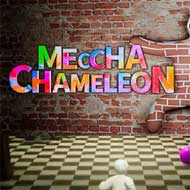
You press your pure white body flat against a painted wall, mix your colors to match the mural behind you stroke for stroke, and hold perfectly still while a Seeker’s cursor drifts past without stopping. That held breath, right before you find out whether the paint job actually worked, is the moment Meccha Chameleon is built entirely around.
| Genre | Multiplayer hide-and-seek |
| Core Mechanic | Paint your body to blend into the environment before Seekers find you |
| Platform | PC |
Painting as the Central Skill of Meccha Chameleon
Ordinary hide-and-seek games hide players behind objects. Meccha Chameleon hides players inside the environment itself, using a full-body painting tool that lets Hiders color their blank white avatar to match whatever surface they press against. Blending into a mural, a patterned wall, or a stack of crates becomes a genuine art exercise, not just a matter of finding a shadowy corner.
New Hiders tend to paint quickly and pick an obvious hiding spot, prioritizing speed over quality. More experienced Hiders slow down, study the exact color transitions on a wall, and commit to a pose that matches the surface’s shape as much as its color, since a Seeker’s eye catches shape mismatches faster than color mismatches.
By the time the countdown clock nears zero, a half-finished paint job becomes the single biggest giveaway in a round, which is why rushing the last few seconds of preparation is the most common way a Hider gets found early.
Seekers, Hiders, and the Round Structure of Meccha Chameleon
Each round splits players into a Seeker team hunting for hidden opponents and a Hider team racing against the countdown to disappear convincingly before the search begins. Seekers win by finding every Hider before time runs out, which puts real pressure on Hiders to commit fully rather than half-hiding and hoping for the best.
- Hiders choose a surface, then paint and pose to match it before the timer ends
- Seekers scan the environment once the hiding phase closes, looking for shape or color mismatches
- A found Hider is eliminated for the remainder of that round
That asymmetry, half art contest and half tense stealth game, is what players frequently point to as the game’s most creative contribution to a genre that hadn’t changed much in years, even if a handful of Seekers complain that a truly perfect paint job can feel unfindable by design.
Do I need real artistic skill to play Meccha Chameleon well?
Some drawing sense helps, but reading the environment and picking a pose that matches a surface’s shape often matters as much as raw painting ability.
Can Seekers tell the difference between a good and bad paint job?
Yes, mismatched shape or color at the edges of a Hider’s body is usually what gives away an otherwise decent attempt, more than color choice alone.
What happens if a Hider is found during a round?
That player is eliminated from the current round while the remaining Hiders continue trying to stay concealed until time runs out.
What keeps Meccha Chameleon compelling well past the first few rounds is how much room the format leaves for genuine creativity within a simple win condition, since every new wall or crate stack is really just a blank canvas dressed up as a hiding spot for the next Seeker to walk past.
Tomodachi Life: Living the Dream looks like a simple island-building toy at a glance, but it plays like a slow-burn soap opera you mostly just get to watch, since the Miis populating that island make most of their own decisions with only occasional player input.
| Genre | Life simulation |
| Core Mechanic | Populate an island with Mii avatars and guide their autonomous relationships |
| Platform | Console |
Building an Island of Miis in Tomodachi Life: Living the Dream
The foundation is populating an island with Mii characters modeled after yourself, family, friends, or entirely original creations, then designing the physical space they live in with homes, stores, restaurants, and other buildings. Rather than directly controlling these Miis moment to moment, players mostly guide the world around them and step in occasionally when a Mii needs help resolving a personal problem.
New players often try to micromanage every Mii’s daily routine, checking in constantly and feeling like nothing is happening without direct input. Players who settle into the format instead let stretches of time pass unattended, then return to find relationships and rivalries that developed entirely on their own.
By the time an island has a dozen or more Miis, that hands-off pacing becomes the entire appeal, since the surprises come specifically from what happened while nobody was watching.
Relationships and What’s New in Tomodachi Life: Living the Dream
Miis develop relationships and personal storylines with a level of autonomy that keeps the island feeling alive between direct check-ins, and this entry notably expands representation within that relationship system, including same-sex relationships and non-binary Mii identities.
- Miis can be modeled after real people or built entirely from imagination
- Relationship options include same-sex pairings alongside traditional pairings
- Non-binary Mii identities are supported as a standard character option, not a hidden setting
Players and fan communities responded warmly to those additions, treating them as a meaningful, overdue evolution of a life-simulation format built entirely around letting players see themselves and the people they know reflected on the island, though a small number of longtime players have debated how these changes shift the tone of an island built primarily around lighthearted absurdity.
Do I need to have played an earlier Tomodachi Life game first?
No, Tomodachi Life: Living the Dream stands on its own, though returning fans will recognize the core Mii-based life simulation immediately.
Can I add real people as Miis on my island?
Yes, Miis can be created based on yourself, family members, friends, or entirely original characters with custom appearances and personalities.
Does the game support same-sex relationships between Miis?
Yes, this entry expanded relationship options to include same-sex couples and non-binary Mii identities as standard choices.
Reviving a beloved life-simulation formula after a long gap is a genuine risk, but Tomodachi Life: Living the Dream leans into what made watching a Mii named after your own sibling awkwardly propose to a Mii modeled on a childhood friend so memorable in the first place, rather than reinventing the format beyond recognition.
In Family Secrets 1: Empty Plate you start with a phone call that sounds ordinary enough, Mom leaving for work for several days, leaving Miko in charge of his younger sibling Jun, and every scene afterward slowly curdles that mundane setup into something far more unsettling.
Miko and Jun: Childhood Responsibility at the Center of Family Secrets 1: Empty Plate
Rather than opening with an obvious threat, the game roots its horror in something far more grounded: a child suddenly responsible for another child, in a home that starts feeling wrong in ways too subtle to name at first. That framing gives the slow-burn tension real emotional stakes, since the fear isn’t just about what might be lurking in the house, but about Miko’s own fragile sense of control slipping as the days without his mother stretch on.
Players expecting a jump-scare-driven horror experience often miss the quieter details early on, dismissing an unfinished meal or a door left ajar as set dressing rather than a genuine clue about Jun’s wellbeing. Players who slow down and actually inspect the house instead start piecing together the household’s unraveling well before the story spells it out directly.
By the time Jun’s behavior shifts noticeably from the opening scenes, the earlier details a careful player noticed stop feeling incidental and start feeling like the actual warning they were.
Exploration and Light Puzzles Inside Family Secrets 1: Empty Plate
Mechanically, the game keeps things simple: a first-person walking simulator where Miko explores the house, interacts with objects, and pieces together the unraveling situation through light puzzle-solving rather than combat or complex systems.
- Object interaction: examining household items that hint at what’s actually happening to Jun
- Environmental storytelling: an unfinished meal, a door left ajar, details that reward close attention
- Light puzzles: simple obstacles tied to caring for Jun rather than combat or reflex challenges
That restraint keeps the focus squarely on atmosphere and narrative discovery, letting small details around the home do the storytelling work instead of relying on mechanical complexity to generate unease, a design choice that answers a common question directly: no, there is no combat or chase sequence forcing tension artificially.
A Compact, Focused Runtime for Family Secrets 1: Empty Plate
The story wraps in roughly thirty to forty minutes, a runtime built for a single sitting that suits its slow-burn, single-location structure well. Stretching the premise further would risk diluting the tension between Miko and Jun’s situation, so the game keeps its focus narrow rather than padding the house with extra rooms or side content.
Players who rush through tend to miss the cumulative weight of small details, since no single object or line of dialogue is meant to carry the story alone. Players who linger in each room instead notice how the same detail, revisited later, reads completely differently once more of Jun’s situation has come into focus.
A fair point some players raise is that the short runtime leaves certain threads around the household underexplained, though that restraint is also what keeps the central tension between Miko’s responsibility and his own fear from getting diluted.
What makes Family Secrets 1: Empty Plate stand out among short horror releases is how firmly it grounds its dread in Miko and Jun’s relatable family situation before ever leaning on anything supernatural, and that emotional honesty, paired with a house worth exploring slowly, is exactly why the quiet unraveling between two siblings lands harder than a jump scare ever could.
You hand the microphone to a friend, queue up a clip neither of you has heard in months, and watch a panel of judges score an impression that’s either uncannily perfect or an instant, hilarious disaster. The Choicer Voicer 2 continues betting entirely on that unpredictable moment, tracing its format back to The Choicest Voice, a much smaller minigame it expanded into a full experience of its own.
The Vocal Impression Format at the Core of The Choicer Voicer 2
The premise stays refreshingly simple: match your voice against a chosen audio clip and let a panel of in-game judges score how convincing the impression turns out to be. That stripped-down structure puts nearly all the entertainment value on the players themselves rather than on scripted content.
Players new to the format often over-rehearse a clip before recording their attempt, chasing technical accuracy over commitment. Players who do better instead lean fully into an exaggerated, committed take, since the judges consistently reward conviction over note-perfect mimicry.
A round can be genuinely hilarious or a complete flop depending entirely on who’s holding the microphone, and The Choicer Voicer 2 leans fully into that unpredictability rather than trying to smooth it out.
A Blank-Canvas Approach to Content in The Choicer Voicer 2
True to the spirit of The Choicest Voice concept it grew from, The Choicer Voicer 2 ships with comparatively little built-in material, treating the experience as a blank canvas that players and communities are expected to fill themselves.
Community content: that design choice puts real weight on the surrounding community to supply audio clips, prompts, and custom content, turning the game into more of a flexible framework for a gameshow night than a fixed, finished product, and it answers a common early question directly, whether the base experience feels thin without extra clips; it does, until community-made content gets added in.
Judges, Rounds, and Group Play in The Choicer Voicer 2
Structured as a game show built for small groups, The Choicer Voicer 2 supports rounds where computer-controlled judges vote on each player’s vocal impression, keeping games playable even without a full table of friends on hand. That scoring structure gives even casual playthroughs a sense of stakes and progression, since every round produces a clear winner based on how convincingly a clip was mimicked.
Groups that play regularly tend to develop their own house rules around judge scoring, since a small panel of computer-controlled judges can occasionally reward an unexpectedly weak attempt over a genuinely funny one. That inconsistency is a fair criticism some players raise, though most treat it as part of the format’s chaotic charm rather than a flaw worth fixing.
How many players can join a session of The Choicer Voicer 2?
The format supports small groups, making it playable solo against computer-controlled judges or with a handful of friends passing the microphone around.
How does judge scoring work round to round?
Computer-controlled judges vote on each vocal impression immediately after it’s performed, producing a clear per-round winner based on how convincing the attempt sounded.
The format supports small groups, making it playable solo against computer-controlled judges or with a handful of friends passing the microphone around.
Do I need custom content to enjoy The Choicer Voicer 2?
The base experience ships light on built-in material, so community-made clips and prompts add significantly to long-term replay value.
Is singing or acting skill required to do well?
No, the appeal comes from committed, funny attempts at vocal impressions rather than technical performance skill, since judges tend to reward conviction over precision.
The appeal of The Choicer Voicer 2 has never really been about polish or content volume, it’s about handing a microphone to a group of friends and letting their own personalities generate the entertainment, the same spark that made The Choicest Voice memorable in miniature, now given a full stage to run wild in.
Kitty never stops bouncing in Cats Love Cake, not even for a moment, and that one constraint changes everything about how the game is actually played. Steering only ever happens left and right while the bounce continues on its own, turning a genre usually built around jump timing into something closer to a rhythm of careful nudges.
| Genre | Physics platformer |
| Core Mechanic | Steer a continuously bouncing character left and right toward a slice of cake |
| Platform | Browser and mobile |
The Bounce-Steering System Behind Cats Love Cake
Kitty’s vertical bounce in Cats Love Cake never stops, which means every jump arc is already in motion before a direction gets chosen. Spikes, holes, and shifting cube obstacles are placed to punish overcorrection just as often as hesitation, so clean runs come from small, well-timed nudges rather than sharp directional snaps.
New players tend to steer the way they would in a normal platformer, holding a direction firmly and expecting Kitty to stop where they release the key. That habit is the most common early mistake, since Kitty keeps bouncing straight into a hazard while the player is still reacting to the last one.
Once a level introduces moving cube platforms, the bounce-steering skill stops being optional. Timing a nudge to land exactly on a cube mid-shift is the point where casual players start relying on the game’s built-in hint system, while more dedicated players memorize the cube’s rhythm instead.
Level Hazards and the Forgiving Failure Loop in Cats Love Cake
Each stage ends in a slice of cake, with hazards escalating from simple gaps to the moving cube platforms that demand precise bounce timing. Cats Love Cake softens its own difficulty after repeated failures, offering visual hints once a player has missed the same section a few times.
That leniency matters because the bounce-steering scheme has enough of a learning curve that a harsher failure state would push casual players away before the mechanic fully clicks. One detail only visible after several failed attempts: Kitty’s bounce height shifts slightly depending on the surface just cleared, which explains why an identical-looking nudge sometimes lands differently.
Unlocking the Wider Cast in Cats Love Cake
Completing levels steadily unlocks additional playable animals beyond Kitty, including a pig, a dog, a penguin, and an elephant, each carrying the same bounce mechanic but with its own weight and personality. Players chasing full completion treat collecting the entire cast as its own goal, separate from simply reaching the cake in every level.
- Kitty: the starting character, agile and capable of tight bounce control
- Pig, dog, penguin, and elephant: unlocked through level completion, sharing Kitty’s bounce mechanic with different visual weight
Do the unlocked animals play differently from Kitty?
Not mechanically. The bounce and steering behavior stays consistent across the pig, dog, penguin, and elephant, so the appeal is mostly cosmetic variety layered onto the same core movement.
What happens if I keep failing the same section in Cats Love Cake?
The game begins showing visual hints after repeated failures on that section, pointing toward the safer bounce path instead of leaving players guessing indefinitely.
Why does Kitty sometimes bounce higher off certain surfaces?
Bounce height varies slightly depending on the surface Kitty just left, which is why nudges that look identical can produce different arcs from one obstacle to the next.
The appeal of Cats Love Cake comes down to how quickly the constant bounce stops feeling like a limitation and starts feeling like the entire point, and watching Kitty or any of the unlocked animals thread a row of moving cubes on the first clean attempt still lands the way it did on level one.
Short Life 2 looks like a simple obstacle course with a floppy little guy running through it. It plays like a puzzle box built entirely out of ways to kill that floppy little guy in increasingly creative fashion, and the gap between those two impressions is exactly where the game earns its reputation.
Ragdoll Physics as the Real Obstacle in Short Life 2
The ragdoll itself is the hardest part of Short Life 2 to work with, since it has no rigid skeleton and no forgiveness for careless input. Walking, jumping, and climbing all require the same careful, slightly clumsy timing, because pushing forward too aggressively near a ledge lets momentum alone carry the ragdoll straight into a spinning saw blade.
Newcomers usually try to control the ragdoll like a normal platforming character, holding a direction and expecting it to stop cleanly at a ledge. That instinct is the single biggest early mistake, since the ragdoll keeps sliding on its own momentum well past where a rigid character would have planted its feet.
By the time a run reaches its later stages, that same momentum becomes something players actively use rather than fight, nudging the ragdoll just enough to clear a gap instead of stopping short of it.
Traps and Interactive Objects Across Short Life 2
Across more than twenty stages, Short Life 2 escalates from simple gaps and single blades into layered gauntlets involving pressure buttons, movable wooden crates, swinging hazards, and timed explosive charges. Some of these need to be pushed or triggered deliberately to open a path forward, turning certain sections into light puzzles rather than pure reflex tests.
Speedrunning-minded players tend to memorize exact crate placements and button timings well before they master the reflex side of a stage, since knowing the puzzle solution in advance removes half the failure points. Players just looking to enjoy the chaos, by contrast, often trigger every trap on purpose just to watch what happens.
What decides whether an attempt survives a saw-heavy section usually comes down to one specific detail: whether the ragdoll’s arm or leg clips a hazard’s edge a frame before the body would have cleared it, a distinction only visible once you’ve watched enough failed runs to recognize the pattern.
Star collection: scattered stars across each level function as the game’s currency, and gathering enough unlocks new playable ragdoll skins with no change to the underlying physics, giving completionists a cosmetic goal once the main stages are cleared. Trap density scaling: new hazard types appear roughly every few stages rather than all at once, which is why the difficulty curve rarely flattens for long even after twenty-plus levels. Comedy over frustration: nearly every instant death plays out as loose, floppy physics comedy rather than a punishing reset, which is precisely why failing the same section repeatedly stays entertaining instead of grating, and it’s also the most divisive element among players who want tighter, more serious platforming instead.
Short Life 2 never asks players to stop laughing at their own failures, and that constant physics-driven comedy, layered on top of genuinely clever trap sequencing, is why watching the ragdoll crumple through a saw-lined corridor for the fifth time still gets a reaction the sixth time too.