


-

Blob Opera
-

The Choicest Voice
-

SpongeBob Is This How You Get Your Sick Kicks
-
Hiding from Randall Monsters Inc
-

Dance Moms – GET YOUR FINGER OUT OF MY FACE
-

Doppio switch into Diavolo
-

SpongeBob SquarePants – Insultin a mans ship
-

Ichigo vs Grimmjow
-

Family Guy Peter Does Crack
-

TAWOG Have You Noticed That Your Voice Has Changed – The Castle
-

Kung Fu Panda o sigma da Bahia
-

Peter Griffin Plays Call of Duty Dub
-
Stutter incident – Joe Bart
-
No This Is My Lolly

Love You To Pieces













![SEU MANIACO [PT-BR]](https://thechoicervoicergames.com/wp-content/uploads/2026/09/Seu-Maniaco_12_11zon-200x150.webp)











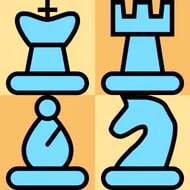

You’re reading a manual full of shapes that mean nothing to you out loud, while a friend across the room holds a pile of parts you can’t see and tries to turn your description into furniture. Neither of you has the full picture, and that gap is the entire reason Love You To Pieces works as well as it does.
The Reader and the Builder in Love You To Pieces
Every session splits its two players into fixed roles. The Reader holds a strange building manual and has to describe what it shows without simply reading it word for word, since the diagrams rarely translate cleanly into plain language. The Builder can’t see that manual at all and instead handles the physical parts directly, trying to match what’s being described to what’s actually in their hands.
This split is deliberately uneven. The Reader often assumes a shape or connector is obvious from the manual, while the Builder is working from vague verbal description alone, which is where most of the game’s comedy and most of its frustration both come from.
Two players are required for a session to function at all, since the entire design depends on one person’s information being invisible to the other.
Why Neither Player Can See the Same Thing
The game borrows its central tension from communication-under-pressure formats, where one player has the knowledge and the other has the controls. Here that same imbalance gets applied to something as mundane as home furniture, which is exactly what makes it funny rather than tense in the way a bomb-defusal scenario would be.
Early sessions tend to go badly on purpose. New pairs usually try to shortcut the communication barrier by describing things too vaguely, assuming the other player will just figure it out, and get a lopsided, half-wrong piece of furniture for their trouble.
Pairs who slow down and start agreeing on shared vocabulary before touching a single part tend to have noticeably smoother runs than pairs who dive straight in.
Chasing the Perfect Build
The stated goal of every round is reaching what the game calls the perfect build – matching the manual’s intended design as closely as possible rather than just producing something vaguely chair-shaped. Since neither player can verify the result until the build is finished, most of the tension comes from not knowing how close you actually are until the very end.
Achievement-minded players tend to replay pieces specifically chasing that perfect result, while players who just want a laugh with a friend are usually satisfied with whatever chaotic shape comes out the other side.
Comparing the finished furniture to what it was supposed to look like is consistently the moment players describe as the funniest part of a session.
Miscommunication as the Actual Game
What separates this from a simple instruction-following exercise is that the manual itself leans into confusion the way real self-assembly furniture sometimes does, referencing shapes and steps that are technically accurate but easy to misread under pressure. That’s a deliberate nod to the kind of instructions players already associate with cheap self-assembly furniture.
It’s worth being upfront that this design is divisive by nature. Pairs who enjoy improvising through confusion find the format hilarious, while players who prefer clear, solvable puzzles sometimes find the vagueness of the manual more irritating than funny, especially in a shorter thirty-minute session.
Love You To Pieces turns a mundane build-it-yourself chore into a shared performance where getting it wrong is usually funnier than getting the perfect build right, and that’s exactly the trade the game is built around.
Comments
There are no reviews yet. Be the first one to write one.