


-

Blob Opera
-

The Choicest Voice
-

SpongeBob Is This How You Get Your Sick Kicks
-

Hiding from Randall Monsters Inc
-

Dance Moms – GET YOUR FINGER OUT OF MY FACE
-

Doppio switch into Diavolo
-
SpongeBob SquarePants – Insultin a mans ship
-

Ichigo vs Grimmjow
-

Family Guy Peter Does Crack
-
TAWOG Have You Noticed That Your Voice Has Changed – The Castle
-

Kung Fu Panda o sigma da Bahia
-

Peter Griffin Plays Call of Duty Dub
-
Stutter incident – Joe Bart
-
No This Is My Lolly

Do NOT Grow This Watermelon
![SEU MANIACO [PT-BR]](https://thechoicervoicergames.com/wp-content/uploads/2026/09/Seu-Maniaco_12_11zon-200x150.webp)









![[Dub Mode] Garfielf](https://thechoicervoicergames.com/wp-content/uploads/2026/09/Dub-Mode-Garfielf_1_11zon-200x150.webp)











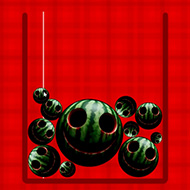
The moment a watermelon fully forms on the board, the screen doesn’t celebrate – it turns red. That single detail separates Do NOT Grow This Watermelon from the fruit-merging formula it’s clearly built on top of, and it’s the reason the title isn’t just a joke.
How Do NOT Grow This Watermelon Flips the Merge Formula
The base formula is instantly familiar to anyone who’s played a Suika-style merge game. Cherry and berry combine into apple, orange, melon, and on up the tier list, fusing into something bigger every time matching fruits touch inside the container. Where the standard version treats reaching a watermelon as the finish line worth chasing, this variant treats it as the thing you were supposed to avoid.
Once that final fruit forms, the board erupts into a cascade of extra watermelons that crowd the container almost instantly. Players used to the calm pacing of the original tend to get caught off guard the first time it happens, since nothing earlier signals how disruptive that single merge will be.
Growth, normally the entire point of the genre, becomes the mechanic working against you here.
Why Reaching a Watermelon Becomes the Real Danger
Because bounce and roll depend on how each fruit descends, no two runs unfold the same way, making the game harder to plan around than the formula it modifies. Careful players who keep a clear side for big merges still get punished by physics that refuse to cooperate.
There’s no traditional win screen – the challenge is holding the container together as long as possible, reframing the genre around damage control instead of steady accumulation. Casual players find this stressful, while score-chasers prefer it since the danger spikes stay unpredictable.
This randomness is the most debated part of the design – a bad bounce can end a strong run through no fault of the player, which some find thrilling and others frustrating.
- Keep a clear lane open for larger fruits before a watermelon can form
- Watch descent angles, since bounce and roll aren’t fixed like the original
- Treat a near-watermelon merge as a warning, not a goal to rush toward
What actually happens once a watermelon appears on the board?
The screen shifts red and triggers a cascade of extra watermelons that rapidly fill the container, harder to manage than any earlier stage of a run.
Is this variant harder than the original watermelon merge game?
Generally yes, since the fruit you’d normally work toward becomes a hazard, and unpredictable bounce physics remove some of the planning the original rewards.
Is there an actual way to win, or just survive longer?
There’s no fixed victory condition – success is measured by how long you keep the container from overflowing, shifting the game toward survival rather than reaching a specific fruit.
Do NOT Grow This Watermelon takes a familiar formula and quietly inverts its core reward, and once you’ve watched a cascade of watermelons swallow your container, you stop thinking of growth as progress at all.
Comments
There are no reviews yet. Be the first one to write one.