


-

Blob Opera
-

The Choicest Voice
-

SpongeBob Is This How You Get Your Sick Kicks
-

Hiding from Randall Monsters Inc
-

Dance Moms – GET YOUR FINGER OUT OF MY FACE
-

Doppio switch into Diavolo
-
SpongeBob SquarePants – Insultin a mans ship
-

Ichigo vs Grimmjow
-

Family Guy Peter Does Crack
-
TAWOG Have You Noticed That Your Voice Has Changed – The Castle
-

Kung Fu Panda o sigma da Bahia
-

Peter Griffin Plays Call of Duty Dub
-
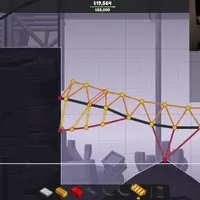
Stutter incident – Joe Bart
-

No This Is My Lolly

Criticality












![SEU MANIACO [PT-BR]](https://thechoicervoicergames.com/wp-content/uploads/2026/09/Seu-Maniaco_12_11zon-200x150.webp)




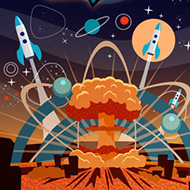
Criticality looks, at a glance, like a simple science toy — a grid, some particles, a few numbers ticking upward. It plays like a countdown you triggered yourself, watching a single split atom cascade into something you can no longer fully control.
| Genre | Incremental / Chain Reaction Simulation |
| Core Mechanic | Neutron-splitting chain reactions |
| Setting | A late-night reactor experiment |
Criticality: One Atom, Two Neutrons, Big Consequences
The premise behind Criticality is grounded in a real piece of nuclear physics: an atom absorbs a neutron, splits, and emits two neutrons in return. On paper that sounds contained. In practice, once enough atoms are seeded into the system, each new split doubles the potential for the next, and the chain reaction stops behaving like something you’re managing and starts behaving like something you’re merely watching unfold.
The framing casts you as someone conducting a late-night experiment, deliberately pushing a reaction toward criticality rather than stumbling into one by accident. That intentionality gives the exponential growth an edge of dark comedy — you know exactly what you’re building toward, and the game leans into that awareness rather than hiding it.
Watching a System Outgrow Your Control
What makes Criticality worth returning to isn’t just the escalating numbers, it’s the specific moment where a chain reaction crosses from “manageable” to “inevitable.” Recognizing that threshold before it arrives is the closest thing the game has to a real skill, since everything after it plays out largely on its own momentum regardless of further input.
Players who enjoy incremental games in general tend to find something familiar here, but Criticality’s twist is thematic rather than mechanical — the exponential growth curve is a well-worn incremental-game shape, dressed up as something considerably more consequential than a typical clicker’s currency count.
Seeding Too Many Atoms Too Soon
New players often seed too many atoms too early, assuming a slower, more controlled buildup will be easier to manage than it actually turns out to be. Criticality’s chain reactions scale exponentially rather than linearly, which means an early decision that looks modest can compound into a runaway reaction far faster than intuition suggests.
The other frequent mistake is treating the whole experience as a straightforward numbers-go-up incremental without paying attention to the framing. Part of what the game is doing is building tension specifically around the idea of a system escaping your control, and rushing through without absorbing that tone skips past what makes Criticality distinct from a generic clicker.
A Short Experience With a Clear Point
Criticality doesn’t aim for a long runtime, and it doesn’t need one — the core idea lands within a single sitting, and stretching it further would dilute the specific tension it’s built around. That tight scope is generally treated as a strength in community discussion rather than a shortcoming.
- Seed atoms gradually rather than all at once to observe how the chain reaction scales
- Watch for the threshold where the reaction shifts from manageable to self-sustaining
- Treat the experience as a short, focused sitting rather than an extended incremental grind
Is Criticality based on real nuclear physics?
The core neutron-splitting concept is grounded in real chain reaction physics, though the game simplifies it into an accessible incremental format rather than a strict simulation.
Does the reaction ever stabilize, or does it always run away?
Once a chain reaction crosses its critical threshold, it tends to escalate rapidly rather than settle — that inevitability is central to what the game is trying to communicate.
By the time the numbers in Criticality stop being something you’re steering and start being something you’re simply watching happen, the game has made its point about exponential growth more effectively than most incrementals bother to try.
Comments
There are no reviews yet. Be the first one to write one.