


-

Blob Opera
-

The Choicest Voice
-

SpongeBob Is This How You Get Your Sick Kicks
-

Hiding from Randall Monsters Inc
-

Dance Moms – GET YOUR FINGER OUT OF MY FACE
-

Doppio switch into Diavolo
-
SpongeBob SquarePants – Insultin a mans ship
-

Ichigo vs Grimmjow
-
Family Guy Peter Does Crack
-

TAWOG Have You Noticed That Your Voice Has Changed – The Castle
-
Kung Fu Panda o sigma da Bahia
-

Peter Griffin Plays Call of Duty Dub
-
Stutter incident – Joe Bart
-
No This Is My Lolly

A Dance of Fire and Ice












![SEU MANIACO [PT-BR]](https://thechoicervoicergames.com/wp-content/uploads/2026/09/Seu-Maniaco_12_11zon-200x150.webp)








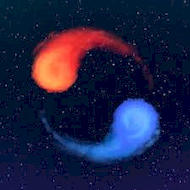
One button. That’s the entire control scheme of A Dance of Fire and Ice, and it’s exactly why a single sixteen-beat run late in the level list can still end in a planetary explosion within the first three taps. Compare that to almost any other rhythm game asking for four lanes or six keys, and the pitch sounds almost insultingly simple. It isn’t. Two planets, one stationary and one orbiting, share the screen, and tapping at the wrong sliver of a second sends them crashing into each other, level over, back to the last checkpoint.
One Tap, Two Planets, No Room for a Second Button
Every level in A Dance of Fire and Ice runs on the same pair of orbs. One planet sits locked to whatever tile it last landed on, the other swings around it in a continuous orbit, and the single input locks that orbiting planet onto the next tile the instant it’s pressed. Get the timing right and the pair swaps roles, the track scrolling forward with the music. Get it wrong, tapping too early, too late, or not at all before the orbiting planet completes a full loop, and the two collide.
There’s no health bar to cushion that mistake.
What makes the one-button premise hold up across dozens of tracks is how much information gets packed into that single decision. Speed, rhythm, and melodic phrasing all funnel through one tap’s timing, which is why players who dismiss the control scheme as simplistic after the first world usually eat their words by the fourth.
Reading Tile Angles Before the Beat Arrives
The track itself does most of the talking. Each tile sits at an angle relative to the one before it, and that angle encodes how many beats separate the current tile from the next: a straight, 180-degree tile represents a full beat, while a sharp 90-degree turn compresses that gap to half a beat. Reading the geometry ahead of the orbiting planet, rather than reacting to it, is the skill actually being tested.
A tap only registers if it lands within roughly 60 degrees of the target tile, about a third of a beat of leeway, and that window doesn’t stay generous forever. As a track’s tempo climbs, the margin for error shrinks with it, tightening until the timing window flattens out at its strictest near the highest built-in tempos.
This is also where the game splits its audience. Some players lean on visual tile-reading, treating the track like sheet music; others close their eyes to the geometry and just feel for the beat, a divide the community argues about constantly.
How World 1 Teaches Rules That World 12 Breaks
The twelve built-in worlds function as a slow-motion tutorial that never announces itself as one. World 1 introduces the tap-and-orbit loop over gentle, mostly straight tiles set to the game’s own title theme, while Offbeats soon after punishes players who’ve gotten comfortable locking onto every downbeat by hiding beats in the silence between notes instead.
By the time The Wind Up and Love Letters roll around, tile patterns demand players anticipate tempo changes mid-track rather than lock into one rhythm and coast. Midnight Train pushes further, layering visual noise around the track so reading angles gets harder before the timing even gets stricter, and that cumulative structure is why so many hit a wall on their first attempt at the back half of the world list rather than easing in gradually.
Right-Angle Turns and the Reputation of World 12
World 12 has a reputation for burying players under right-angle turns, with clusters of fast triangle tiles demanding three clean taps in quick succession where earlier worlds would spread the same rhythm across a full bar. World 11 leans on a similar toolkit of tri-beat turns and square loops just before it, so the ramp across the last two official worlds feels steeper than anything before.
Why A Dance of Fire and Ice Punishes Guessing Over Feeling
Ask around in the game’s community and one complaint surfaces constantly: tracks that hide tempo shifts behind visual clutter can feel unfair on a blind first attempt, since the geometry meant to telegraph the rhythm is momentarily impossible to parse. It’s a real point of debate, and even players who love the back half of the world list admit certain sections reward memorization over genuine sight-reading.
What tends to convert skeptics is going back afterward, since once a track’s layout is memorized, A Dance of Fire and Ice stops feeling like a guessing game and starts feeling like choreography, precisely the tension the title is named after. The first playthrough of a hard level and the twentieth can feel like two different games, and plenty of community favorites only click once the geometry stops being a surprise.
Checkpoints, Crashes, and the Cost of a Missed Swing
Built-in levels break into segments with checkpoints along the way, so a missed swing minutes into a track doesn’t send a player back to tile one, only to the nearest safe point. That safety net matters more than it sounds, since it’s the difference between treating a hard section as a wall and treating it as one more rhythm to memorize in isolation before reconnecting it to what surrounds it.
From the Level Editor to Steam Workshop Charts
Beyond the twelve official worlds, A Dance of Fire and Ice ships with a full level editor that lets anyone chart tile-by-tile timing to a song of their choosing, using the same tools the built-in worlds were made from. That editor, paired with Steam Workshop support, turned the game from a fixed twelve-world package into a platform with an endless stream of new tracks.
The results vary wildly in polish, from tightly charted song tributes down to joke levels built purely to troll players with a fake-out tile, and charting well turns out to be its own skill separate from playing well. Creators who understand how the 60-degree hit window interacts with tile angle build reputations around charts that feel fair even at brutal speeds, while sloppier charts get called out for confusing difficulty with dishonesty.
The Custom Levels Players Call Genuinely Unfair
Ask veteran players which custom levels actually earned their brutal reputations rather than just being long, and a handful of names come up again and again:
- XH and XO, cited among the hardest community-made charts for relentless tile density
- Bonus, a level some rank above the official world list in raw difficulty
- Heracles, known for sustained precision rather than one hard section
- 12-X, treated as an unofficial thirteenth world by players chasing something harder than World 12
These aren’t levels a newcomer should chase early. They exist for players who’ve cleared the built-in worlds and want the community’s honest answer to what’s actually hard now.
Why A Dance of Fire and Ice’s Difficulty Scale Keeps Climbing Past 20
Because the editor puts no ceiling on tile density or tempo, the community built its own difficulty scale running well past the range the built-in worlds ever touch, with tiers subdividing past 20 as new extreme charts keep raising the bar. Dedicated sites catalog these levels alongside player completion records, turning a twelve-world rhythm game into a living leaderboard of self-made extremes.
Is A Dance of Fire and Ice hard for beginners?
The early worlds are genuinely gentle, built around slow, mostly straight tile sequences that give a new player time to internalize the tap-and-orbit rhythm before anything gets tricky. The difficulty only turns sharp once tempo changes and right-angle turns start stacking around the later official worlds.
Can you play custom levels made by other players?
Yes, through Steam Workshop support that lets anyone browse and play community-charted levels built in the game’s own editor, from beginner-friendly tributes to extreme charts like XH or 12-X that go well past anything in the twelve official worlds.
A Dance of Fire and Ice earns its audience by turning a single tap into the entire language of the game, and once the last right-angle turn of World 12 finally clicks into a clean run, the orbiting planet stops feeling like an obstacle and starts feeling like a partner keeping time.
Comments
There are no reviews yet. Be the first one to write one.