


-

Blob Opera
-

The Choicest Voice
-

SpongeBob Is This How You Get Your Sick Kicks
-

Hiding from Randall Monsters Inc
-

Dance Moms – GET YOUR FINGER OUT OF MY FACE
-

Doppio switch into Diavolo
-

SpongeBob SquarePants – Insultin a mans ship
-

Ichigo vs Grimmjow
-

Family Guy Peter Does Crack
-

TAWOG Have You Noticed That Your Voice Has Changed – The Castle
-

Kung Fu Panda o sigma da Bahia
-

Peter Griffin Plays Call of Duty Dub
-
Stutter incident – Joe Bart
-

No This Is My Lolly

Crown Guard













![SEU MANIACO [PT-BR]](https://thechoicervoicergames.com/wp-content/uploads/2026/09/Seu-Maniaco_12_11zon-200x150.webp)






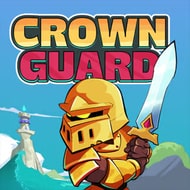
What happens when your gold mines get overrun before your towers are even finished? In Crown Guard that single mistake tends to snowball fast, because the mines are what pay for everything else you’re trying to build, and a raid that reaches them early can stall your whole defense before the real waves even start.
| Genre | Tower Defense with Troop Routing |
| Objective | Protect the Crown |
| Controls | Tap Tiles to Build, Draw Paths for Soldiers |
| Progression | Gems Earned Per Victory |
Why Crown Guard Rewards Protecting Gold Mines First
The crown itself sits at the center of every map, but treating it as the only thing worth defending is a mistake, since losing your gold mines early cuts off the resources needed to build the towers that actually keep the crown safe later.
New players in Crown Guard tend to build defensively around the crown and leave the mines exposed, only to find themselves gold-starved by the point where stronger towers are actually needed.
A better opening move is securing at least one mine with a cheap tower before spending anything on the crown’s immediate perimeter, since early gold compounds into far more defense later than an extra tower placed too soon.
Drawing Soldier Paths That Don’t Waste Their Attack Window
Soldiers only fight along the path you draw for them, which means a route that wanders past empty tiles instead of cutting toward enemy territory wastes precious seconds of combat time every single wave.
Players who redraw the path reactively, after watching where the first wave breaks through, consistently outperform players who set one path at the start and never touch it again.
- Draw paths that pass directly through your strongest tower coverage, not around it.
- Reroute soldiers away from a lane that’s already collapsing rather than reinforcing a lost cause.
- Keep at least one short backup path ready for when the primary route gets cut off mid-wave.
Tower Placement in Crown Guard: What Beginners Get Wrong
Empty tiles look interchangeable at first glance, but tiles near a chokepoint are worth far more than tiles along an open edge, and spending early gold on the wrong ones is one of the most common reasons a defense falls apart by the middle waves.
The temptation to fill every available tile the moment gold allows is strong, but a half-built spread of weak towers loses to a concentrated cluster of upgraded ones almost every time.
- Identify the tile where multiple enemy paths converge before building anything else.
- Upgrade one or two towers there fully before spreading gold across new tiles elsewhere.
Spending Gems on Permanent Upgrades Without Wasting Them
Gems earned from a completed defense carry over as permanent skill upgrades, and the honest disagreement among players is whether to spend them evenly across categories or dump everything into one strong upgrade path early.
Committing gems to a single strong tower type tends to pay off faster, but it also leaves you vulnerable on maps where that tower type doesn’t cover the terrain well.
Frequently Asked
Can I move a tower to a different tile after placing it?
No, once a tower is placed on a tile in Crown Guard it stays there, so tile selection matters more than most players assume on their first run.
Do gold mines need to be defended the same way as the crown?
Yes, mines can be destroyed by enemies just like the crown, and losing one permanently reduces the gold available for the rest of that run.
Does redrawing a soldier path cost anything?
No, paths can be redrawn freely between waves at no resource cost, which makes reactive routing one of the cheapest ways to fix a weak defense mid-run.
Every successful run of Crown Guard ends up being less about the crown sitting quietly in the center and more about the gold mines, the soldier paths, and the handful of upgraded towers that had to hold the line long enough for all three to matter.
Comments
There are no reviews yet. Be the first one to write one.