


-
Blob Opera
-
The Choicest Voice
-
SpongeBob Is This How You Get Your Sick Kicks
-
Hiding from Randall Monsters Inc
-
Dance Moms – GET YOUR FINGER OUT OF MY FACE
-
Doppio switch into Diavolo
-
SpongeBob SquarePants – Insultin a mans ship
-
Ichigo vs Grimmjow
-
Family Guy Peter Does Crack
-
TAWOG Have You Noticed That Your Voice Has Changed – The Castle
-
Kung Fu Panda o sigma da Bahia
-
Peter Griffin Plays Call of Duty Dub
-
Stutter incident – Joe Bart
-
No This Is My Lolly
Tiny Bunny
![SEU MANIACO [PT-BR]](https://thechoicervoicergames.com/wp-content/uploads/2026/09/Seu-Maniaco_12_11zon-200x150.webp)


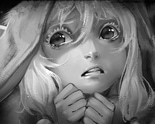
You step into a cold taiga night behind Anton, boots crunching on frozen mud, and the village lights ahead flicker out one by one before you reach them. That single walk sets the tone for Tiny Bunny, a choice-driven horror game where every hallway, every half-lit kitchen, and every silence between characters is doing something to your nerves on purpose.
| Genre | Horror Visual Novel |
| Setting | A remote Siberian village |
| Main Character | Anton |
| Structure | Non-linear, choice-based, multiple endings |
Anton, Olya, and the Village That Watches Back
Tiny Bunny follows Anton, a boy who has just moved with his family into a village tucked deep in the taiga, and his younger sister Olya, whose presence anchors several of the story’s quieter, more human scenes. The move is framed as an ordinary relocation, but the village itself resists that framing almost immediately. Neighbors say too little. Rooms feel colder than the season explains. Nothing about the opening hours announces itself as a horror game in the traditional sense, and that restraint is precisely why the eventual turn lands so hard.
What makes the early stretch work is how ordinary it insists on being. You get chores, small talk, a sister who wants attention, a town square that looks like a postcard. Players who go in expecting jump scares from minute one often misread this pacing as slowness, when it is actually the game building trust it intends to break later.
By the time Anton starts noticing details that don’t belong — a toy in the wrong place, a neighbor’s story that contradicts itself — the game has already taught you to distrust everything, which is the point.
Alisa, Teddy, Hooty, and Wolfy: The Masked Children
The four masked children Anton encounters are the game’s most iconic image: Alisa wearing a fox mask, Teddy in a bear mask, Hooty as an owl, and Wolfy as a wolf. They read as playful at first, almost like local kids who never take their costumes off, and the game leans into that ambiguity for a long time before letting you understand what they actually represent to the village’s history.
Community discussion tends to circle back to Alisa specifically, since her scenes carry some of the sharpest tonal whiplash in the whole game — sweet in one line, unsettling by the end of the same conversation. Wolfy tends to show up when things are about to get physically dangerous rather than just eerie, which players pick up on quickly once they’ve been through a branch or two.
These four are not interchangeable spooky-kid filler. Each has a distinct role in how the plot escalates, and recognizing which one is present in a given scene tells you something about what kind of danger you’re walking into.
Choices That Actually Rewrite the Story
Tiny Bunny is built around branching choices rather than a single fixed script, and the game is unusually committed to that structure — decisions early in an episode can close off entire scenes later, not just alter a line of dialogue. Players who try to see everything in one run are working against the design; the game expects replays.
By the time you reach the later episodes, small early choices about how Anton treats Olya or how much he investigates versus avoids the masked children start compounding in ways that are easy to miss on a first playthrough.
There are twenty documented endings once the full arc resolves, ranging from Anton dismissing everything as a bad dream, to being institutionalized, to a time-skip epilogue set decades later. None of them feel like a “good” ending in a conventional sense — they’re more like different shapes of the same unresolved horror, which is exactly the kind of ambiguity that keeps the community arguing about interpretation long after credits roll.
Black-and-White Art as a Horror Tool
The visual presentation leans almost entirely on black and white, with color used sparingly enough that when it does appear, players notice immediately. It’s a deliberate choice that turns the whole game into something closer to an old photograph coming apart at the edges, and it does a lot of the atmospheric work that a horror game would otherwise need loud sound design to achieve.
The original soundtrack complements this rather than competing with it — quiet, wintery, occasionally warping into something wrong at exactly the moments the story needs you unsettled rather than startled.
What Tiny Bunny Hides in Plain Sight
New players consistently underestimate how much Tiny Bunny rewards paying attention to background detail rather than dialogue alone. The game rarely spells out what’s happening; it expects you to notice that a room has changed since your last visit, or that a character’s answer doesn’t line up with something they said two scenes ago.
The other common mistake is rushing choices. Because the interface doesn’t always signal that a decision is significant, players tend to click through dialogue at the same pace as a normal conversation, only to realize an episode later that a throwaway-seeming option actually locked them out of a whole thread involving Olya or one of the masked children.
The Divisive Ending Structure
Not every player is on board with how deliberately unresolved Tiny Bunny stays even after twenty endings. Forum discussion regularly splits between people who find the ambiguity the whole point — a story about a child’s trauma that was never going to hand you a clean answer — and players who wanted at least one ending to confirm what was “real” within the story’s own logic. That tension is honest to acknowledge rather than paper over, and it’s one of the more consistently debated aspects of the game in community spaces.
Is Tiny Bunny based on a book?
Yes. The game is a video game adaptation of a novel of the same name, and that origin shows in how dense and literary the prose gets in later episodes compared to a typical horror game script.
Do I need to replay to see everything?
Effectively yes — the choice structure locks out entire scenes depending on early decisions, so a single playthrough will only ever show you one thread of what happened to Anton, Olya, and the village.
Are the masked children the main threat?
Alisa, Teddy, Hooty, and Wolfy are central to the mystery, but the game is careful not to reduce them to simple monsters — part of what makes long-time players keep discussing Tiny Bunny is how their role shifts depending on which branch you’re in.
Strip away the taiga setting and the twenty branching endings, and what’s left of Tiny Bunny is still a story about a kid trying to make sense of a village that lies to him with a smile, which is exactly why Anton’s walk home in that opening scene never quite leaves you once the game is over.
Comments
There are no reviews yet. Be the first one to write one.