


-
Blob Opera
-
The Choicest Voice
-

SpongeBob Is This How You Get Your Sick Kicks
-
Hiding from Randall Monsters Inc
-

Dance Moms – GET YOUR FINGER OUT OF MY FACE
-

Doppio switch into Diavolo
-
SpongeBob SquarePants – Insultin a mans ship
-
Ichigo vs Grimmjow
-
Family Guy Peter Does Crack
-

TAWOG Have You Noticed That Your Voice Has Changed – The Castle
-
Kung Fu Panda o sigma da Bahia
-
Peter Griffin Plays Call of Duty Dub
-
Stutter incident – Joe Bart
-
No This Is My Lolly

Universe Sandbox 2




![SEU MANIACO [PT-BR]](https://thechoicervoicergames.com/wp-content/uploads/2026/09/Seu-Maniaco_12_11zon-200x150.webp)


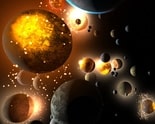
Universe Sandbox 2 looks, from a screenshot, like a serious astronomy tool — orbits, gravity, planets rendered with real texture detail. It plays like the exact opposite: a destruction sandbox where the entire point is finding out exactly how a planet comes apart under a black hole, a swarm of asteroids, or a laser fired straight through its core.
| Genre | Physics Destruction Sandbox |
| Weapon Count | Over 30 unique tools |
| Core Draw | Physics-accurate planetary destruction |
| Structure | No levels, no win condition |
Universe Sandbox 2: Thirty-Plus Ways to End a Planet
The weapon roster in Universe Sandbox 2 is the reason it keeps coming up in conversation years after release. Lasers, black holes, comets, meteors, nukes, antimatter missiles, UFOs, battleships, space fighters, railguns, supernovas, laser swords, giant monsters, and even celestial beings are all real, selectable tools, alongside defensive options like shields and satellites for players who want to protect a planet rather than erase it. With more than thirty unique weapons in the current roster, a meaningful number of them can be customized further — color, strength, size, amount, velocity, or variant, depending on the weapon.
What separates this from a simple visual gimmick is that the destruction actually follows a physics engine rather than a scripted animation. Debris scatters based on impact force and mass, gravity pulls fragments back together or flings them into orbit, and no two detonations play out quite the same way twice.
The Black Hole: Slow, Inevitable, Satisfying
Community discussion consistently singles out the black hole as one of the most satisfying tools in the entire arsenal, precisely because of how differently it behaves compared to anything explosive. Deploy one near a planet and gravity does the actual work — slowly, methodically pulling the planet apart piece by piece rather than vaporizing it in an instant. Nothing that gets pulled in escapes, which gives the whole process a sense of inevitability that faster weapons don’t replicate.
Compare that to something like a Railgun Salvo, which is built for speed instead — rapid sequential strikes meant to clear a hemisphere quickly before you switch to something bigger for the finishing blow. Having both extremes available in the same toolkit is part of what keeps repeat sessions interesting.
Asteroid Strikes Scale With You
Asteroid impacts are worth calling out specifically because of how directly they scale with size — a small rock hits with roughly the force of a nuke, while the largest asteroids available can rip entire continents off a planet on contact alone. That scaling makes asteroids a useful middle ground for players who want destruction that still respects a sense of proportion, rather than jumping straight to something planet-ending.
The Planet Killer weapon sits at the other extreme — a charge-up laser that fires straight through a planet toward its core, with a customizable beam color that’s become something of a signature screenshot moment in the game’s community.
Reaching for the Biggest Weapon First
New players often reach for the flashiest weapon first — a supernova or a giant monster — and are disappointed when destruction happens too fast to actually observe. Universe Sandbox 2 rewards starting smaller: a single asteroid or a slow black hole lets you actually watch the physics engine do its work, rather than skipping straight to an instant, screen-filling explosion that’s over before you’ve processed it.
The other frequent mistake is ignoring the defensive tools entirely. Shields and defensive satellites exist for a reason, and pairing an offensive weapon against an active defense produces some of the more interesting outcomes in the game — trying attacks in a vacuum against an undefended planet only shows half of what the sandbox can do.
No Goals, and That’s the Point
There’s no scoring system, no campaign, and no win condition in Universe Sandbox 2 — a structural choice that some players find limiting after the novelty of the first few sessions wears off, while others consider it the entire appeal, a pure physics toy without any pressure attached to how you use it. That divide comes up constantly in community discussion, and it’s worth going in aware of which side of it you’re likely to land on.
- Over 30 unique weapons, from lasers to black holes to giant monsters
- Nine or more weapons support further customization
- No campaign structure — pure sandbox destruction
- Start with a single asteroid or a black hole before jumping to instant-kill weapons
- Pair offensive tools against active shields to see genuinely different outcomes
- Customize weapon color and size once you’ve found a favorite to make it your own
Is Universe Sandbox 2 based on real physics?
Yes — destruction follows a physics engine rather than scripted animations, which is why identical weapons can produce different results depending on planet mass, angle, and timing.
Can I protect a planet instead of destroying it?
Defensive weapons like shields and satellites exist specifically for that, and using them against an active attack shows a very different side of the sandbox than pure destruction runs.
Whether you spend your first session with a slow black hole or jump straight to a customized Planet Killer beam, Universe Sandbox 2 keeps its promise the same way every time — nothing about watching a planet come apart ever quite stops being satisfying.
Comments
There are no reviews yet. Be the first one to write one.