


-

Blob Opera
-

The Choicest Voice
-

SpongeBob Is This How You Get Your Sick Kicks
-
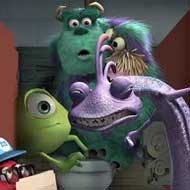
Hiding from Randall Monsters Inc
-

Dance Moms – GET YOUR FINGER OUT OF MY FACE
-

Doppio switch into Diavolo
-
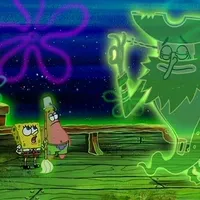
SpongeBob SquarePants – Insultin a mans ship
-
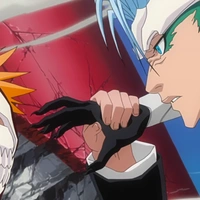
Ichigo vs Grimmjow
-
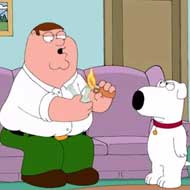
Family Guy Peter Does Crack
-

TAWOG Have You Noticed That Your Voice Has Changed – The Castle
-
Kung Fu Panda o sigma da Bahia
-
Peter Griffin Plays Call of Duty Dub
-
Stutter incident – Joe Bart
-
No This Is My Lolly

Escape from Wormwood




![SEU MANIACO [PT-BR]](https://thechoicervoicergames.com/wp-content/uploads/2026/09/Seu-Maniaco_12_11zon-200x150.webp)









You are thirteen years old, standing over a body that isn’t breathing anymore, and you have been told your entire short life that this is an honor. That is where Escape from Wormwood begins its real story, even if the escape itself is what the title promises. Before Drop can run from the mouse cult that raised her, she has to first admit to herself that the god she has spent her whole life serving might not deserve her.
Drop’s Life Before Escape from Wormwood Begins
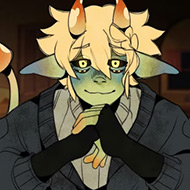
Drop, sometimes called “little raindrop” by the few who care for her, is a mouse who was assigned to the grim end of the cult’s ritual work at thirteen. Her job was preparing bodies for the feast: draining blood, doing the cutting once a victim had stopped moving. Escape from Wormwood does not soften this. It hands you Drop’s routine as normal, because to her it was normal, and lets the horror creep in sideways as you realize what “preparing” actually means.
What makes Drop compelling rather than simply grim is that she never reads as a monster. She was taught, from a very young age, that every part of the process honored the Highest Power, and Escape from Wormwood spends real time letting you sit inside that belief before it starts to crack. Early in the game, cracks are small: a hesitation, a question she doesn’t ask out loud. By the time the story reaches its second half, those cracks have become the whole plot.
Players who come in expecting a straightforward horror romp are often caught off guard by how much of Escape from Wormwood is really about faith and complicity. The tension comes from watching someone realize, in real time, that her god might be a lie built on convenient cruelty.
The Highest Power and the Grove’s Poisoned Mercy
Wormwood’s cult worships something called the Highest Power, and the grove around the commune grows poison berries in abundance. Travelers who wander in and eat them get sick, and the cult takes them in under the guise of care, waiting for the poison to clear their systems before the real purpose reveals itself. It’s a small worldbuilding detail, but it’s the kind of specific, quietly awful mechanic that makes Wormwood feel like a place with actual rules rather than a generic cult setting.
That detail reframes Drop’s job in an uncomfortable light: the mercy shown to sick travelers is itself the trap, and Drop has spent years as the last stage of a machine she was never allowed to see the start of.
Loam’s Arrival and the Question of Right and Wrong
Loam, a researcher who ends up in Wormwood alongside two companions, is the character most directly responsible for cracking Drop’s worldview open. Rather than lecturing her, Loam asks questions Drop has never had reason to ask herself, and the relationship between them becomes the emotional spine of Escape from Wormwood. Players consistently point to Loam as the character they got attached to fastest, which makes what eventually happens to Loam land as hard as it does.
Loam’s fate by the end of the story is genuinely tragic, and it’s a major reason the game’s tone shifts from “can Drop escape” to “what does escaping even cost.” Community discussion around Escape from Wormwood tends to circle back to this death specifically, since it’s the moment the story stops being about Drop’s internal doubt and starts being about irreversible loss.
- Drop — the cult-raised mouse whose job was preparing bodies for the feast
- Loam — the researcher who helps Drop question everything she believed
- Trick — a mouse nearly killed during the story’s cult violence
- Peat — a witch with photography-based magic, captured and imprisoned by the cult
Peat, Trick, and the Others Caught in the Grove
Peat is a witch whose specialty is photography magic, and her capture and imprisonment by the cult forms one of the story’s more upsetting threads, since her power is tied to memory and observation rather than anything violent. Trick, meanwhile, is nearly killed over the course of the plot, and players have spent time in the comments debating exactly who the cult was hunting for and why. Neither character gets as much screen time as Drop or Loam, but both are used efficiently, giving Wormwood the feeling of a fuller community rather than a single-protagonist tunnel.
These side threads matter because Escape from Wormwood is a small game, built for a jam and playable in about half an hour, and it uses Peat and Trick to imply a bigger, uglier world than it has time to show directly.
Choices and Endings in Escape from Wormwood
Choices in Escape from Wormwood steer tone and detail more than they fork the plot into wildly different outcomes, which suits a story this tightly wound. The path toward the promised happy ending involves a two-year time jump near the finale, showing Drop adjusting to a world outside the cult that raised her, and that jump is where a lot of players say the game earns its emotional payoff. One scene late in the story, a closed room with blood escaping through a drain, is the single image most commonly brought up when players describe what stuck with them after finishing.
Getting to that ending means surviving the cult’s response to Drop and Loam’s doubt, and the game does not pretend that questioning your god costs nothing. Beginners sometimes expect a cult story to end in dramatic confrontation with a charismatic leader; Escape from Wormwood mostly declines that shape, which is itself one of the more debated choices among players who wanted a clearer villain to push against.
The Removed Epilogue and a Divisive Ending
For a while, Escape from Wormwood shipped with an epilogue after the main story, and community reaction to it was rough enough that the epilogue was pulled and marked non-canon. Players argued it undercut the tragedy the rest of the game had earned, making Loam’s death and the cult’s violence feel less weighty in hindsight. It is a genuinely divisive piece of the game’s history, and it’s rare to see a jam-scale visual novel get revised in direct response to player feedback like this.
Some players still miss the extra material and wish it had been rewritten rather than cut outright; others think the removal fixed the ending’s tone entirely. Either way, discussing Escape from Wormwood in any depth means eventually running into this argument.
Horror Without Jump Scares
Escape from Wormwood earns its horror label through implication and atmosphere rather than sudden shocks. Content warnings cover blood, gore, and cannibalism, and the game trusts you to sit with the discomfort of Drop’s ordinary-seeming routine rather than startling you with it. That restraint is part of why it’s been compared by some players to Umineko in how it uses a cute, deceptively soft art style to carry genuinely dark material.
The cute-versus-horrific contrast is doing a lot of work throughout: mouse character designs that would fit a children’s book are placed directly next to ritual sacrifice, and that friction is the thing most players remember two minutes into their first playthrough.
Is Escape from Wormwood connected to Lonely Wolf Treat?
Yes. Escape from Wormwood shares its setting and continuity with Lonely Wolf Treat, but it is built to stand on its own, and you do not need any history with that earlier story to follow Drop’s arc from cult devotion to doubt.
Does Escape from Wormwood have jump scares?
No. The developer has been explicit that the horror here comes from atmosphere, implication, and the cult’s violence rather than sudden scares, which is part of why the tone reads as sad and unsettling rather than startling.
How long does it take to finish Escape from Wormwood?
Most players report finishing in around half an hour, which is short by design; it’s a jam-scale story that leans on Drop, Loam, Peat, and Trick to do a lot of emotional work in a compact runtime rather than spreading itself thin.
Escape from Wormwood works because it never treats its horror as separate from its heart. Drop’s slow, painful realization that the Highest Power she served was never worth the blood spilled in its name is the whole engine of the story, and by the time the cult’s grove is finally behind her, the game has made you feel exactly how much that escape cost.
Comments
There are no reviews yet. Be the first one to write one.