


-
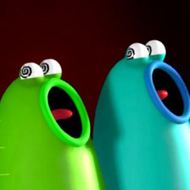
Blob Opera
-
The Choicest Voice
-

SpongeBob Is This How You Get Your Sick Kicks
-
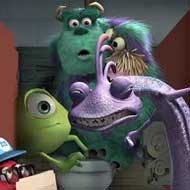
Hiding from Randall Monsters Inc
-

Dance Moms – GET YOUR FINGER OUT OF MY FACE
-

Doppio switch into Diavolo
-
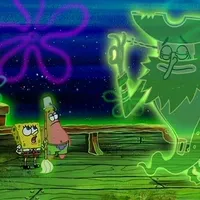
SpongeBob SquarePants – Insultin a mans ship
-

Ichigo vs Grimmjow
-
Family Guy Peter Does Crack
-

TAWOG Have You Noticed That Your Voice Has Changed – The Castle
-
Kung Fu Panda o sigma da Bahia
-
Peter Griffin Plays Call of Duty Dub
-
Stutter incident – Joe Bart
-
No This Is My Lolly

Who Is









![SEU MANIACO [PT-BR]](https://thechoicervoicergames.com/wp-content/uploads/2026/09/Seu-Maniaco_12_11zon-200x150.webp)









In Who Is you start with a full grid of faces in front of you and exactly one hidden identity to uncover, which matters because every question you spend on a vague trait instead of a distinguishing one is a question you don’t get back before the grid narrows down to a guess.
| Genre | Character Guessing Party Game |
| Modes | Single Player and Pass and Play |
| Controls | Click or Tap to Ask and Eliminate |
| Session Length | A Few Minutes Per Round |
Asking Questions That Cut the Grid in Half
The core mechanic in Who Is rewards questions that split the remaining faces roughly evenly, not questions that only eliminate one or two candidates at a time — a question about hair color usually removes more possibilities early than a question about a single accessory.
New players tend to ask about the most visually obvious feature first, which feels intuitive but often wastes a turn if most of the remaining faces already share that trait.
Once the grid narrows to five or six candidates, the more efficient players switch strategy entirely, asking narrower questions that a single face can answer instead of broad ones built for a full grid.
What Beginners Get Wrong About Early-Round Guesses
Guessing outright before the grid is small enough is the most common way to lose a round in Who Is, since a wrong direct guess costs far more than a wrong yes-or-no question would have.
The temptation to guess early gets stronger the longer a round goes, especially once a player feels confident about a specific face, but patience through two or three more questions consistently outperforms an early gamble.
- Confirm at least two distinguishing traits before committing to a direct guess.
- Avoid repeating a question type that already gave an unhelpful answer once.
Reading Your Opponent’s Questions for Clues
In pass and play mode, the questions your opponent asks reveal almost as much as the answers you give them — a sudden shift toward a specific trait usually means they’ve narrowed their own suspicion down to a small group of faces.
Experienced players deliberately vary their own question order to avoid giving away information the same way, which is the kind of meta-layer that keeps repeat matches from feeling identical.
Why Some Rounds of Who Is Take Longer Than Others
A round can run short or long depending entirely on how evenly the first two or three questions split the grid, and a genuinely unlucky first question can leave a much larger pool to work through than a well-chosen one would have.
That variance is one of the more debated parts of Who Is among regular players — some enjoy the unpredictability, while others wish early questions carried a more reliable guarantee of narrowing things down.
Frequently Asked Questions
Can Who Is be played solo against the computer?
Yes, a single-player mode lets you question a computer-controlled opponent instead of needing a second person on the same device.
Is there a limit to how many questions you can ask per round?
No hard limit exists, but taking too long to ask discourages the tight, efficient play that makes narrowing the grid satisfying in the first place.
Does the identity of the hidden face change between rounds?
Yes, a new face is selected at the start of each round, so memorizing the previous round’s answer doesn’t carry over.
Strip away the grid and the yes-or-no questions, and Who Is is really a game about information — every question either narrows the field meaningfully or wastes a turn you’ll wish you had back once the grid gets small.
Comments
There are no reviews yet. Be the first one to write one.